Call Us
 Book a Repair
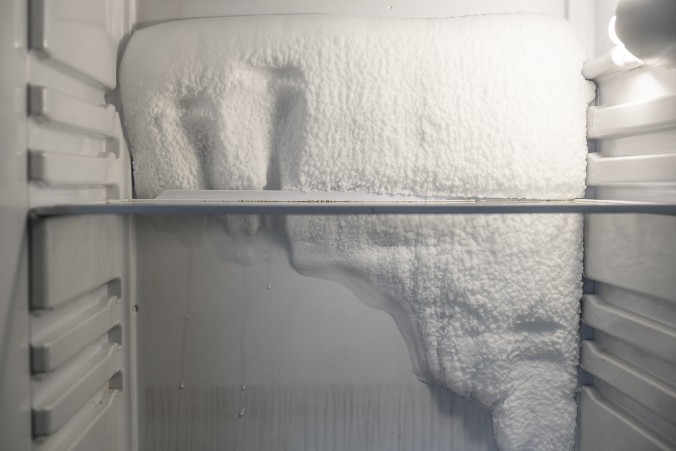

Let’s face it, defrosting the freezer is a chore most of us put off for as long as possible. But letting that ice build up is a silent budget killer.
When thick ice coats the coils inside, it behaves like a heavy winter blanket. The compressor has to run constantly just to keep your food frozen. And that means your electricity bills climb month after month.
If you leave the frost to pile up, you end up with bigger issues. Drawers get jammed so tightly that you might crack the plastic trying to pull them open.
On top of that, your food is far more likely to get ruined by freezer burn because the internal temperature becomes totally uneven.
That’s why regular maintenance keeps the appliance running smoothly and helps you avoid expensive repairs.
Key Takeaways
- Ice over 6 mm thick forces your compressor to work twice as hard. Defrosting cuts down your electricity bill.
- But safety comes first. Unplug the unit before you start. Never scrape at the ice with a knife, because a single slip can puncture the wall and release dangerous refrigerant gas.
- Keep the hairdryer away. Mixing water and electricity is incredibly dangerous and the direct heat can easily warp the plastic inside. Instead, put bowls of hot water inside or use a de-icing spray.
- Make sure you dry the inside completely after cleaning. Any leftover moisture will turn right back into ice as soon as you turn the power back on.
- Wait for the temperature to drop before restocking. Let the empty unit run for a couple of hours before you put any food back.
Signs Your Freezer Needs Defrosting
How do you know when it is actually time to clear out the ice?
Look out for these obvious warning signs:
- The 6 mm rule: If the frost is thicker than a pencil, it is time to act. Some models have a red indicator tag to show you when the ice is too thick.
- Sticking parts: Drawers that refuse to slide out or a door that won’t seal properly are clear red flags.
- Lost space: You will notice a drop in usable space inside the compartments.
- A damaged door seal: Warm air gets pulled in constantly, which creates massive frost build-up in record time.
- Blocked vents or drains: If condensation cannot escape, it turns into ice instantly.
Our guide on whether defrosting actually makes a freezer work better goes into more detail on these causes and how they affect performance.
How to Defrost a Freezer: Step-by-Step
Defrosting is straightforward once you follow a logical sequence. Rushing the process is how kitchen floors end up soaked, so take your time.
- Unplug the appliance: This is non-negotiable. You want to completely eliminate any risk of electric shock.
- Empty the shelves: Pack everything into a cool box with plenty of ice packs. If a drawer is frozen shut, do not force it. Just leave it to thaw a bit first.
- Catch the water: Lay down old towels or newspapers around the base. Placing a shallow tray right under the drain spout will catch the worst of the runoff.
- Let nature do the work: Keep the door wide open. But you can speed things up by placing bowls of steaming hot water inside on trivets and closing the door.
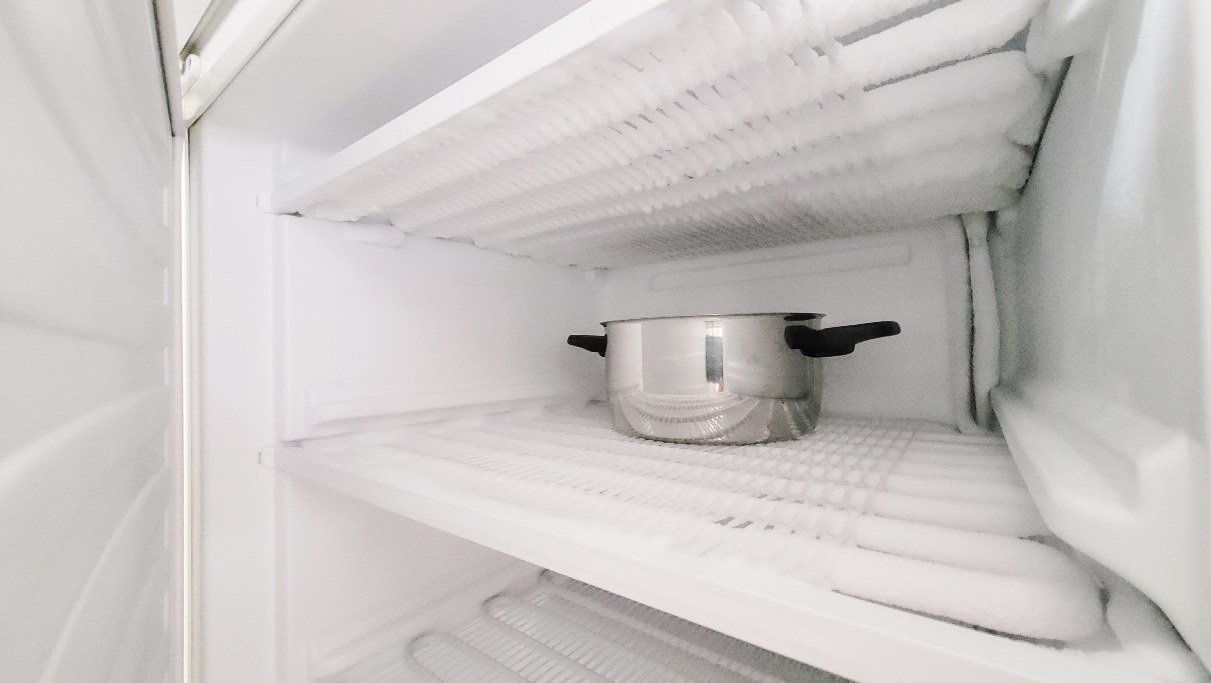
- Scrape away loose chunks: Use a plastic spatula. Avoid anything made of metal.
- Clean and dry: Wipe down the walls with warm water and bicarbonate of soda. Then grab a dry tea towel and make sure there is no moisture left behind.
- Cool it down: Plug the freezer back in and let it run empty for at least an hour or two.
If you notice water pooling somewhere it shouldn’t during this process, it’s worth checking whether the drain channel itself is blocked.
Our page on why a fridge freezer might be leaking water explains how to find and clear that kind of obstruction.
How to Speed Up Defrosting
If you are in a hurry to get your food back inside, you can use one of these safe acceleration methods.
| Method | How to Do It | Safety Check |
|---|---|---|
| Hot Water Bowls | Put steaming bowls on trivets inside and close the door. | Totally safe, just refresh the water as it cools. |
| De-Ice Spray | Spray onto stubborn frost to melt it in minutes. | Safe if you use a brand recommended by your manufacturer. |
| Circulating Fan | Point a standard room fan at the open freezer. | Safe and effective, though it takes a bit longer than hot water. |
| Steam Cleaner | Use a handheld steam wand to melt and sanitise. | Safe, but keep the electrical cord away from pooling water. |
Cleaning and Re-Stocking Safely
Cleaning the freezer is worth the extra 10 minutes. A simple mix of warm water and bicarbonate of soda works wonders.
Use about a tablespoon per litre. This lifts stains and stops any weird smells from ruining your food.
But drying is the real secret here. If you leave even a little bit of moisture on the walls, it will freeze over immediately.
When it comes to putting your food back, patience is your best friend. Do not rush to reload. Let the empty freezer run for one to two hours so it reaches the proper freezing temperature.
Putting food back too early can cause partial thawing. And that can make your food unsafe to eat.
If items fully thawed out during the process, do not simply throw them back in. Raw foods that thawed safely are okay to refreeze, but only if you cook them first. Otherwise, you run a real risk of food poisoning.
It’s also worth checking the freezer has settled at the correct storage temperature. Our guide to the ideal fridge and freezer temperature explains what to aim for and why it matters for food safety.
How to Prevent Ice Build-Up
You can keep frost at bay with a few simple habits:
Do not leave the door hanging open while you unpack groceries.
Let hot leftovers cool down completely on the counter before freezing them.
Avoid packing drawers so full that the door cannot close all the way.
Keep the door seals clean and check them regularly for cracks.
If frost keeps coming back despite good habits, the issue might run deeper than everyday use.
Our page on common fridge and freezer problems covers faults like a failing thermostat or blocked drain hole that could be behind persistent icing.
Frequently Asked Questions
How often should I defrost my freezer?
Most manual freezers need a defrost every three to six months. But you should really just keep an eye on the ice thickness.
Can I leave it plugged in?
No. You must turn it off. It keeps you safe and gives the compressor a much-needed break.
How long does defrosting a freezer take?
It usually takes a few hours. But you can cut that time down significantly using the hot water method.
Will defrosting a freezer lower my energy bills?
Yes. Getting rid of the ice barrier lets the system cool your food with much less effort.