
 Call Us
 Book a Repair
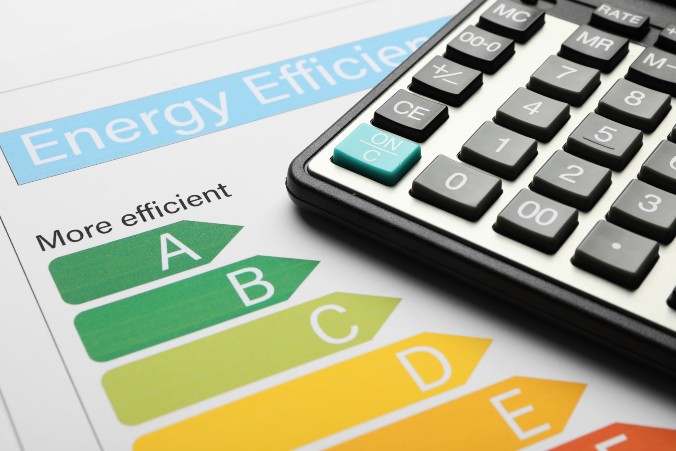

UK appliance energy ratings run on an A to G scale that shows how much electricity, and often water, a washing machine, fridge freezer, dishwasher or tumble dryer uses compared with others of its size and type.The scale was rebuilt in March
2021 to replace the old A+++ system, and the top A band was deliberately left almost empty so manufacturers still have room to improve.
Reading the label properly, from the coloured bar down to the QR code, lets you compare real running costs before you buy, and helps you judge whether a struggling appliance is worth repairing rather than replacing.
Stand in front of two similar-looking fridge freezers in a showroom and the price tags rarely tell the whole story.
One might carry a D rating, the other an E, and over a decade of running non-stop that gap can add up to real money on an electricity bill.
As someone who spends most working days inside washing machines, ovens and fridges rather than reading their spec sheets, I’ve noticed how often people misread these labels, or assume an old A+++ sticker still means what it used to.
This guide walks through what the current UK scale measures, how it changed and how to spot an appliance that isn’t performing the way its label promises.
Key Takeaways
- UK appliances now carry an A to G energy rating, introduced in 2021 to replace the crowded A+, A++ and A+++ scale.
- The A band was left almost empty on purpose, so C or D is often the most efficient rating realistically available today.
- Every current label shows annual kWh use, a QR code linking to the EPREL product database, plus figures such as noise, water use and capacity.
- Fridge freezers matter most for your bill because they run every hour of every day, unlike washing machines or dishwashers.
- Choosing an A+++-rated tumble dryer over a B-rated one can save around £750 over its lifetime, according to the Energy Saving Trust.
Appliance Energy Ratings Explained: The UK Label Scale at a Glance
Appliance energy ratings explained in the simplest terms come down to a single coloured scale running from A to G, and you’ll find it on the fridge freezer, washing machine, dishwasher or tumble dryer you’re considering long before you check the price.
Since 1 March 2021, this rescaled system has applied across Great Britain and Northern Ireland, replacing the older label that ran from A+++ down to G or D depending on the product.
The rating sits inside a legal framework, the UK’s Ecodesign for Energy-Related Products and Energy Information Regulations, which mirrors the EU labelling framework the UK carried over after leaving the bloc.
The old plus-sign system had become almost meaningless by the late 2010s, since so many washing machines and fridges had climbed into the A+++ tier that shoppers could barely distinguish a genuinely frugal model from an average one.
That’s why regulators rebuilt the scale from scratch rather than adding yet another plus sign, a change this guide covers in detail shortly.
For a household trying to cut bills, or for an engineer trying to work out whether an ageing appliance is worth repairing, understanding what these letters actually mean matters more than ever.
Over the rest of this guide, I’ll cover how the rating is worked out, how to read every icon and figure on the label, how the current scale compares with the one it replaced, and what the warning signs look like when an appliance stops living up to its rating.
What Appliance Energy Ratings Measure and How They Work
What appliance energy ratings measure isn’t simply how many watts a machine draws when it’s switched on.
Instead, the rating compares an appliance’s real-world energy consumption against a benchmark set for its size, capacity and function, so a large fridge freezer isn’t unfairly penalised against a compact one, and a big-capacity washing machine is judged against machines built to wash similarly sized loads.
This benchmarking is what makes the label useful for comparison shopping.
A washing machine’s rating reflects the electricity it uses across a standardised eco programme, usually expressed per 100 cycles, rather than a single wash under whatever settings happened to be convenient for a tester.
A fridge freezer’s rating reflects its annual electricity consumption keeping food at a safe temperature around the clock, adjusted for its combined chilled and frozen storage volume.
This is why a small, cheap fridge can sometimes carry a worse rating than a much larger one built with better compressors and insulation.
A high wattage on a spec sheet doesn’t automatically mean an appliance is inefficient, because what matters is how long it needs to run at that wattage to finish the job.
A powerful motor that finishes a wash cycle quickly may use less total electricity than a weaker one running for twice as long, which is another reason the rating looks at total consumption per standardised cycle rather than raw power draw alone.
Underpinning all of this is the Ecodesign framework, the set of rules the UK still applies to energy-related products.
Ecodesign sets minimum performance thresholds a product must clear before it can legally be sold, while the separate energy label communicates where a compliant product sits on the wider efficiency scale.
Manufacturers can’t simply declare a rating. They must test appliances against standardised protocols, using fixed load sizes, water temperatures and ambient conditions, so that a machine tested in one laboratory and one tested elsewhere arrive at genuinely comparable results.
That standardised approach is at the heart of energy efficiency in appliances today.
Why UK Energy Ratings Changed: The 2021 Rescaling Explained
Why appliance energy ratings changed in the UK comes down to a scale that had simply run out of room.
By the late 2010s, manufacturers had improved washing machines, dishwashers and fridges so quickly that most models on sale carried an A+, A++ or A+++ label, and it became nearly impossible for a shopper to tell a genuinely outstanding appliance from a merely decent one just by glancing at the sticker.
Regulators in the UK and EU responded with a full rescaling rather than adding yet another plus sign.
Washing machines, washer-dryers, dishwashers, fridges, freezers and electronic displays sold in Great Britain and Northern Ireland were required to carry the rebuilt A to G label at the point of sale.
Crucially, the new top A rating was deliberately left almost unreachable when the label launched, giving manufacturers genuine headroom to keep improving rather than immediately filling the scale again.
This is why an appliance rated A+++ under the old system doesn’t automatically translate to an A rating under the new one.
Because the tests behind the new label are considerably stricter and the benchmarks have been recalculated from scratch, many appliances that once proudly displayed A+++ now sit in the C, D or even E band, despite being no less efficient than they were before the rules changed.
Nothing about the appliance itself got worse. It’s the yardstick that moved.
The rescaling brought other practical benefits, too.
It aligned the format used across washing machines, dishwashers, fridges and displays, so shoppers see broadly the same coloured bar and layout on almost anything they’re comparing.
It introduced the QR code that links each label to a verified technical data sheet, closing off a loophole where marketing figures didn’t always match independently tested performance.
And it gave Trading Standards and other market surveillance bodies a clearer basis for enforcement, since a label now has to match data lodged on an official product database rather than relying purely on a manufacturer’s own claims.
For anyone shopping today, the practical takeaway is straightforward.
Don’t assume an old rating you remember from a previous appliance still means the same thing. A C or D rating on a brand-new appliance can represent genuinely good performance under the tougher modern test, even though the same letter meant something quite different a decade ago.
Old A+++ to G Ratings Compared With the New A to G Scale
The difference between old and new energy ratings can look confusing if you’re trying to judge a hand-me-down appliance against something in a current showroom.
The good news is that a rough mapping between the two systems is well established, even though it varies slightly by appliance category.
As a general guide, an appliance that carried an A+++ label under the old system typically sits around B or C under the current scale.
Appliances once rated A++ have generally slipped further, often landing around D or E, while models that were only A+ rated under the old rules can now fall as low as F or G.
None of this means those older appliances have become less efficient overnight.
It reflects how much stricter the underlying test methodology became once the label was rebuilt.
| Old rating | Approximate new rating | What it means for shoppers |
|---|---|---|
| A+++ | B / C | Still a strong performer, though rarely the very best available today |
| A++ | D / E | Middling under the new test, worth comparing against current C-rated models |
| A+ | F / G | Likely to use noticeably more energy than a new C or D rated appliance |
This table is only a guide, because the exact position depends on the specific appliance category and how the test protocol changed for that product type.
A fridge freezer and a washing machine were rescaled using different formulas, so two appliances that both carried an A+++ label a decade ago won’t necessarily land on the same new rating.
What this means in practice is that shoppers replacing an old appliance shouldn’t panic if a 10-year-old A+++ fridge freezer would now be labelled D.
But it also shouldn’t be assumed to match a brand-new C-rated model, because newer appliances usually benefit from improved compressors, insulation and motor technology on top of the rescaling itself.
Comparing actual annual kWh figures side by side, rather than relying on the letter alone, remains the most reliable way to judge whether upgrading is genuinely worthwhile.
How to Read an Appliance Energy Label: Icons, Figures and the QR Code
How to read an appliance energy label becomes far easier once you know what each element is trying to tell you, because a modern UK label packs in considerably more than the single letter grade most people notice first.
The coloured bar running down the left-hand side is the headline figure: a scale from A in dark green through to G in red, with a black arrow pointing to the specific model’s position.
This is the quickest way to compare two appliances of the same type at a glance, but it’s only the starting point.
Below the coloured scale sit the figures that reveal how an appliance actually performs day to day.
For washing machines and dishwashers, you’ll typically see annual or per-100-cycle electricity consumption in kilowatt-hours, water use in litres, the duration of the standard eco programme, load capacity, and noise output measured in decibels.
Fridges and freezers show annual kWh consumption alongside separate chilled and frozen storage volumes, since a larger capacity naturally uses somewhat more energy even at the same efficiency level.
Televisions and electronic displays show energy use per 1,000 hours of viewing, alongside screen size and resolution.
Perhaps the most useful recent addition is the QR code printed in the corner of every label.
Scanning it with a phone camera takes you straight to the appliance’s entry in the EU’s product registry for energy label symbols and icons explained in full, generally known as EPREL, where manufacturers are required to lodge verified technical data before a product goes on sale.
That data sheet includes the full test results behind the rating, so you can check that the figure on the shelf label matches what’s officially registered, rather than relying purely on a retailer’s own point-of-sale sticker.
“Customers often skip straight past the QR code because they assume it’s just marketing. It’s actually the fastest way to check a label is telling the truth before you commit to a purchase.”
Reading a label properly means looking beyond the letter.
Two appliances rated C might have noticeably different annual running costs once you compare their actual kWh figures, particularly if one has a larger capacity than you really need.
Checking noise levels matters too if the appliance is going in an open-plan kitchen, and checking programme duration is worth doing if you’re used to older, faster cycles, since some of the most efficient eco settings run considerably longer than a standard cycle.
Energy Ratings by Appliance Category: Fridge Freezers, Washing Machines, Dishwashers and More
Energy ratings by appliance category apply differently depending on what you’re buying, because not every product type is tested, or scaled, in quite the same way.
Fridge freezers carry some of the most consequential ratings in the whole system, simply because they run 24 hours a day, all year round, unlike a washing machine or dishwasher that might only operate for an hour or two several times a week.
A label’s annual kWh figure for a fridge freezer therefore has an outsized effect on your electricity bill compared with almost any other kitchen appliance, and even a modest jump in rating can be worth chasing when replacing an old unit.
So the energy rating for fridge freezers tends to matter more than for any other kitchen appliance.
Larger American-style fridge freezers tend to sit lower on the scale simply because of their greater storage volume, so it’s worth comparing the annual kWh figure directly rather than assuming a bigger unit performs identically to a smaller one carrying the same letter.
Our fridge freezer buying guide looks at how capacity and rating interact when matching a unit to a household’s actual needs.
Washing machines are rated using a standardised eco cycle, generally the 40 to 60 degree programme, with annual or per-100-cycle kWh and water consumption shown alongside load capacity and spin noise.
Because most households run several washes a week, the difference between a mid-range C-rated machine and a genuinely efficient model adds up steadily over the years, even though the per-wash saving looks small on paper.
Our washing machine buying guide covers how these figures translate into everyday running costs for different household sizes.
Washer-dryers sit in a slightly different position, because their label has to account for both a wash-only cycle and a combined wash-and-dry cycle.
Drying adds substantial extra energy use compared with washing alone, which is one reason washer-dryers often land on a lower rating band than a dedicated washing machine of similar size.
If you regularly need to dry a full load in the same machine, comparing the combined-cycle figure rather than the wash-only one gives a far more realistic sense of what the appliance will cost to run.
The energy rating dishwasher figures are worked out on their eco programme in a similar way to washing machines, with kWh per 100 cycles, water use, capacity in place settings and cycle duration all shown on the label.
Larger households running a dishwasher daily see the biggest benefit from choosing a higher-rated model, while an infrequently used dishwasher in a smaller household may not justify paying extra for the very best rating available.
Our dishwasher buying guide explains how eco programmes and capacity affect both electricity and water bills over time.
Tumble dryers are the category that has changed most recently.
From 1 July 2025, tumble dryers sold in the UK and EU moved onto the new A to G label, replacing the previous A+++ to D scale that had applied to this appliance type for longer than most others.
Heat pump dryers, which recycle warm air rather than venting it outside, generally occupy the top of the new scale, while older vented and basic condenser designs sit much further down.
Given how energy-intensive drying is compared with washing, this is one category where chasing a higher rating tends to deliver a genuinely large saving.
Our tumble dryer buying guide compares heat pump, condenser and vented models side by side.
Ovens, cookers and cooker hoods remain on the older A+++ to D scale for now, since the revised testing methods used for other categories haven’t yet been extended to cooking appliances.
This means an oven’s rating isn’t directly comparable to a washing machine’s or a fridge’s, even though the same lettering and colour scheme is used. Insulation quality and cavity size tend to matter as much as the headline rating when it comes to an oven’s real running cost, which is one reason the efficiency spread between models is generally less dramatic than for laundry or refrigeration appliances.
How Energy Efficiency Is Calculated and Tested
How energy efficiency is calculated comes down to an Energy Efficiency Index, a formula that compares an appliance’s measured consumption against a reference value set for its category and size.
An appliance that uses notably less energy than the reference for its type earns a lower index score and, in turn, a higher letter rating, while one that uses more lands further down the scale.
Getting to that index number requires standardised laboratory testing rather than a manufacturer’s own estimate.
Washing machines and dishwashers are run through a fixed eco programme using set load sizes and water temperatures, so every model in a category is tested under identical conditions.
Fridges and freezers are tested at controlled ambient temperatures over an extended period, capturing how much electricity the compressor uses to maintain a safe internal temperature across a full year of typical operation.
Independent verification sits behind all of this. Manufacturers must submit test data and technical documentation to the relevant product database before an appliance can legally carry its rating, and market surveillance authorities can request an independent retest of any model on sale.
This is precisely what stops a manufacturer quietly inflating a rating with favourable in-house testing, since a mismatch between a declared rating and an independently verified retest can result in enforcement action and the label being withdrawn from sale.
This verification chain is also why the QR code on every label matters so much in practice.
It links directly to the lodged technical file, so anyone from a cautious shopper to a Trading Standards officer can check that the figures on a shelf label match what the manufacturer has formally declared.
Running Costs: How Much a Higher Energy Rating Can Save on Bills
Running costs are where an energy rating stops being an abstract letter and starts affecting your bank balance.
Working out the difference between two appliances is genuinely simple arithmetic once you know where to look on the label, which is why the energy rating impact on electricity bills is easier to quantify than many shoppers assume.
Working out annual running cost:
| Step | Formula | What it tells you |
|---|---|---|
| Find the label figure | Annual kWh (or kWh per 100 cycles) | How much electricity the appliance uses under standard test conditions |
| Apply your tariff | Annual kWh × your electricity unit rate | An estimate of the appliance’s yearly running cost |
Multiply the annual kWh figure on the label by the unit rate you actually pay for electricity, and you get a reasonable estimate of what that appliance will cost to run over a year.
This is a useful way to compare two models that look similarly priced in the showroom but carry different ratings, because the cheaper upfront option isn’t always cheaper once several years of running costs are added up.
Our guide to how much it costs to run a washing machine walks through this calculation in more detail for laundry appliances specifically.
Tumble dryers show this most dramatically, because drying is one of the most energy-intensive tasks in an average home.
The Energy Saving Trust has estimated that choosing an A+++-rated tumble dryer over a B-rated model can save in the region of £750 over the appliance’s lifetime in Great Britain, with a somewhat higher figure estimated for Northern Ireland.
Given that a dryer typically stays in service for well over a decade, that gap is large enough to influence which model makes financial sense, even where the more efficient option costs more to buy in the first place.
Fridge freezers deserve the same scrutiny, precisely because they run continuously rather than for an hour here and there.
A relatively small difference in annual kWh consumption between two models compounds every single day the appliance is switched on, which is why even a modest jump in rating band can be worth pursuing when an old fridge freezer needs replacing.
Washing machines and dishwashers show smaller per-cycle differences, but a household running several loads a week over 10 or more years will still see that gap add up steadily rather than trivially.
Energy Ratings vs. Energy Performance Certificates: What’s the Difference?
Energy ratings versus energy performance certificates confuses plenty of people, understandably, since both use similar-sounding language about efficiency and both matter when you’re trying to control household bills.
This is one of the key points in appliance energy ratings explained UK guidance, because the two systems are often confused.
An appliance energy rating measures a single product, from a washing machine to a fridge freezer or a television, against a standardised benchmark for its category.
An Energy Performance Certificate, by contrast, assesses an entire building’s energy performance, covering insulation, heating systems, windows and construction, and is required by law when a property is built, sold or let.
The two systems are produced under separate regulatory frameworks and serve different audiences.
A mortgage lender or letting agent cares about a property’s EPC rating, while a shopper standing in front of a dishwasher cares about that dishwasher’s A to G label.
Confusing the two can lead to poor decisions. Upgrading a fridge freezer from an F to a C rating won’t move a property’s EPC rating at all, because appliances generally sit outside an EPC assessment.
Improving a home’s insulation or heating system, conversely, won’t change the energy label on any appliance inside it.
Budgeting for efficiency improvements works best when these two systems are kept entirely apart, with appliance ratings guiding purchasing decisions and EPC ratings guiding decisions about the building itself.
Is an F or G Energy Rating Bad and What Counts as a Good Rating Today?
Is F energy rating bad is a question that depends heavily on what the appliance is and how often it runs, so the honest answer is rarely a simple yes or no.
Because the top A band was deliberately left close to empty when the scale was rescaled, C or D is often the best rating realistically available across an entire product category, rather than a sign of a mediocre appliance.
A C-rated dishwasher today can genuinely be one of the more efficient models on the market, even though the letter sits in the middle of the alphabet.
Judging a modern appliance against an old mental benchmark, where anything below B once felt disappointing, leads plenty of shoppers to overlook perfectly good options.
F and G ratings sit at the other end of the scale and do represent meaningfully higher running costs, particularly for appliances that run constantly or frequently, such as fridge freezers or washing machines used several times a week.
For those categories, an F or G rating is worth avoiding where a better-rated alternative is affordable, because the gap compounds over years of daily use.
For an appliance used rarely, such as a small chest freezer in a garage or a secondary dishwasher, a lower rating carries far less financial weight, since the total running hours over a year are much smaller.
“I’d never tell someone to panic over a G-rated appliance if it’s something they barely switch on. Where it matters is the appliances running every single day.”
A genuinely efficient choice for a busy family kitchen, where the dishwasher runs daily and the fridge freezer n”I’d never tell someone to panic over a G-rated appliance if it’s something they barely switch on. Where it matters is the appliances running every single day.”
ever switches off, looks different from the right choice for a low-use spare room or holiday let.
Matching the rating to real usage patterns, rather than chasing the highest letter regardless of cost or size, tends to produce the best outcome for most household budgets.
Signs Your Appliance Is Using More Energy Than Its Rating Suggests
Signs your appliance is using more energy than its rating suggests are often easy to miss day to day, because most people only think about energy efficiency in appliances when a bill arrives.
A washing machine or tumble dryer that suddenly takes far longer to finish its cycle than it used to is one of the clearest indicators something has changed, since a struggling motor, a failing heating element or a blocked filter can all force an appliance to run for much longer than its rated cycle time.
A fridge or freezer that feels unusually warm around the compressor, or that runs almost continuously rather than cycling on and off, is often working far harder than its label implies, frequently because of a failing door seal, a faulty thermostat or a compressor nearing the end of its life.
Frost building up rapidly inside a freezer is a similar warning sign, since ice acts as insulation and forces the compressor to work overtime to hold the set temperature.
- Longer cycle times: a wash, dry or dishwasher cycle running noticeably longer than the standard duration on the label.
- Excess heat: a fridge or freezer compressor or casing that feels hotter than usual to the touch.
- Unusual noise: grinding, humming or rattling that wasn’t there when the appliance was new.
- Frost or ice build-up: inside a freezer compartment, especially around the door seal.
- Rising bills without extra use: an electricity bill creeping up despite no real change in household habits.
“A machine that’s drifted away from its rated efficiency is very often fixable. We regularly find a single worn seal or blocked filter behind bills that have crept up for months.”
None of these signs necessarily mean an appliance needs replacing.
A blocked condenser dryer filter, a dirty fridge coil or a worn door seal can often be repaired quickly and cheaply, restoring performance much closer to the appliance’s original rating rather than accepting higher bills or jumping straight to buying something new.
Maximising Efficiency: Daily Habits, Correct Installation and Choosing the Right Size
Maximising efficiency beyond the label itself comes down to a handful of habits that cost nothing and make a genuine difference over a year of use.
This is where an energy efficient appliances buying guide stops being purely about the label and starts being about how you live with the appliance.
Running full loads in washing machines, dishwashers and tumble dryers rather than half-empty ones cuts the total number of cycles needed each week, since these appliances use only marginally more energy for a full load than a partial one.
Using the eco setting whenever practical delivers the exact performance the label was tested against, even though the cycle often runs longer than a quick wash or express setting.
Keeping fridge coils free of dust and dishwasher or dryer filters clear of lint and debris stops appliances working harder than they should for the same result.
- Run full loads: wait until a washing machine, dishwasher or dryer is properly full before starting a cycle.
- Use eco settings: they’re designed to match the figures shown on the energy label.
- Clean coils and filters: dust on fridge coils and lint in dryer filters both force appliances to work harder.
- Choose the right size: an oversized appliance for your household wastes energy even at a good rating.
Choosing the correctly sized appliance for a household matters just as much as chasing a top letter grade, since an oversized fridge freezer or dishwasher for a small household wastes energy cooling or cleaning space that’s rarely used.
Professional installation plays its part, too.
An appliance that isn’t properly levelled, vented or connected can underperform its rated efficiency from the very first cycle, which is one reason a correctly fitted appliance tends to run closer to the figures promised on its label than one installed in a hurry.
Getting to grips with appliance energy ratings pays off well beyond the moment you’re stood in a showroom weighing up two similar-looking machines.
Once you know how to read the label, spot when an appliance has drifted from its rated performance, and judge whether a repair or a replacement makes more sense, those choices stop feeling like guesswork.
If your washing machine, fridge freezer or dishwasher is running hotter, noisier or slower than it should, our engineers can usually diagnose the cause and get it back closer to the efficiency it was built for, often without the cost or waste of buying new.
Frequently Asked Questions
What is the best energy rating for an appliance?
A is the best rating on the current UK A to G scale, representing the lowest energy consumption under standardised testing. Very few models in most categories actually achieve it, which is why C or D often represents genuinely strong real-world performance.
Is a D-rated washing machine good?
Yes. Under the rescaled system, a D rating on a washing machine is generally considered efficient, since the tougher modern tests mean many good machines fall between C and F even when they perform well.
Do all appliances have an energy label?
No. Mandatory labels apply to categories such as washing machines, washer-dryers, dishwashers, fridges, freezers, tumble dryers and electronic displays, while smaller items like kettles, toasters and microwaves aren’t required to carry one.
How can I check an appliance’s true energy rating?
Scan the QR code on the label with a smartphone camera to reach the appliance’s entry in the EPREL product database, where the manufacturer’s verified technical data is held, rather than relying only on a shelf sticker.
