
 Call Us
 Book a Repair
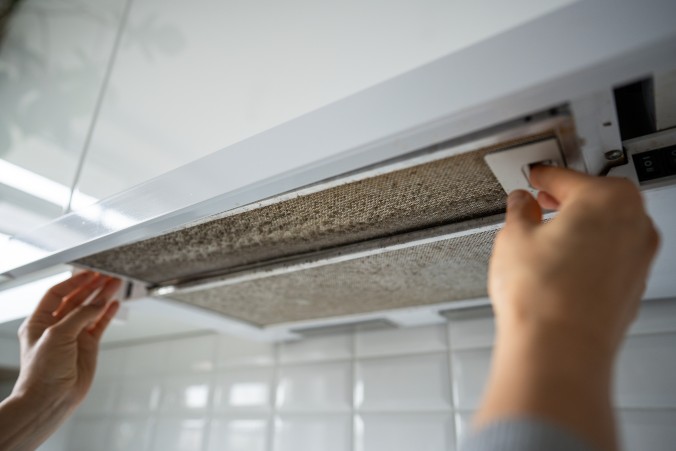

Soak the grease filters in hot soapy water and wipe the fan blades and casing with a mild degreaser. Then polish the stainless steel with a baking soda paste or a proper specialist cleaner. That’s the whole job.
In practice, most UK kitchens need the filters done every one to three months, plus a full strip-down once or twice a year. Leave it longer and you’ll notice. Suction weakens, smells hang about and the motor starts working a lot harder than it should be.
Key Takeaways
- Looks are the least of it. Grease clogs the mesh and strangles the airflow, and it holds onto every smell your kitchen has produced since the last clean. All of that sits above a hob, which is where the fire risk comes in.
- Find out what your filters are made of before you do anything. Metal ones can be soaked and usually survive a dishwasher cycle. Carbon ones can’t be washed at all, and once they’re saturated they’re finished.
- The soak does the work, not your arms. Half an hour in hot water beats 20 minutes of scrubbing, and it won’t wreck the mesh grooves.
- You probably already own everything you need. Washing-up liquid and bicarbonate of soda handle most of it, with vinegar as a finishing rinse. Degreaser is for the really neglected stuff. But keep scourers and bleach away from steel, because that damage doesn’t come back out.
- Know when you’ve stopped cleaning and started diagnosing. If the fan’s still noisy or the motor smells hot after a thorough clean, grease was never the problem. That’s an engineer’s job.
Why Bother With an Extractor Hood Cleaning Guide at All
Here’s the thing about a cooker hood. It fails slowly enough that you never actually notice it failing.
Every time you fry an egg or grill bacon, a fine mist of fat goes up. Some of it gets extracted, and the rest lands on the filter mesh, the fan blades and the underside of the canopy. Six months of that builds a layer you could scrape with a fingernail.
And because it happens a gram at a time, the first real signal most people get is a kitchen full of smoke that should have gone somewhere else.
That grease build-up on extractor hoods causes more than a grubby-looking appliance. It’s the actual answer to why does my extractor hood smell, because trapped fat keeps releasing odour long after the cooking has finished. Airing the room does nothing.
The smell is coming from inside the appliance.
Watch for:
- Steam sitting over the hob rather than being pulled away
- Old cooking smells returning hours later or the next morning
- A yellowish, tacky film on the filter or the canopy edge
- A fan that’s got noticeably louder over the past few months
Those last two tend to appear together. The motor gets louder because it’s fighting a blocked filter, so noise is often the clue people spot first.
Worth mentioning the safety side too. UK fire service records show chip and fat pan fires in England dropped from 2,328 incidents in 2010/11 to 1,182 in 2022/23, which is partly down to better habits and better-maintained kitchen kit. A clean hood is a small piece of that, but it’s not nothing.
What You’ll Need
Nearly all of it is under the sink already. Washing-up liquid and bicarbonate of soda do the heavy lifting, with white vinegar for the finish and a proper degreaser held in reserve.
Getting it all out first turns this into a twenty-minute job instead of an afternoon of trailing back to the cupboard with wet hands.
- Washing-up liquid. Fine for everyday grease in hot water.
- Bicarbonate of soda. Makes a gentle paste that lifts baked-on residue without scratching.
- White vinegar. The acidity cuts the last of the film and stops streaking.
- Microfibre cloths and a soft sponge. Anything rougher will mark metal and glass.
- An old toothbrush. For the mesh grooves, where the worst of it hides.
- Rubber gloves and a commercial degreaser. For hoods that haven’t been touched in years.
Switch the hood off at the mains first. And if you’re using a product you’ve not tried on this appliance before, test it somewhere hidden, because discolouration on a visible panel is permanent.
How to Clean an Oven Hood Filter and Can It Go in the Dishwasher?
Take it out, soak it in hot soapy water, scrub what’s left, then check the manual before it goes anywhere near the dishwasher. Most metal mesh and baffle filters are dishwasher safe. Carbon and paper ones need replacing instead.
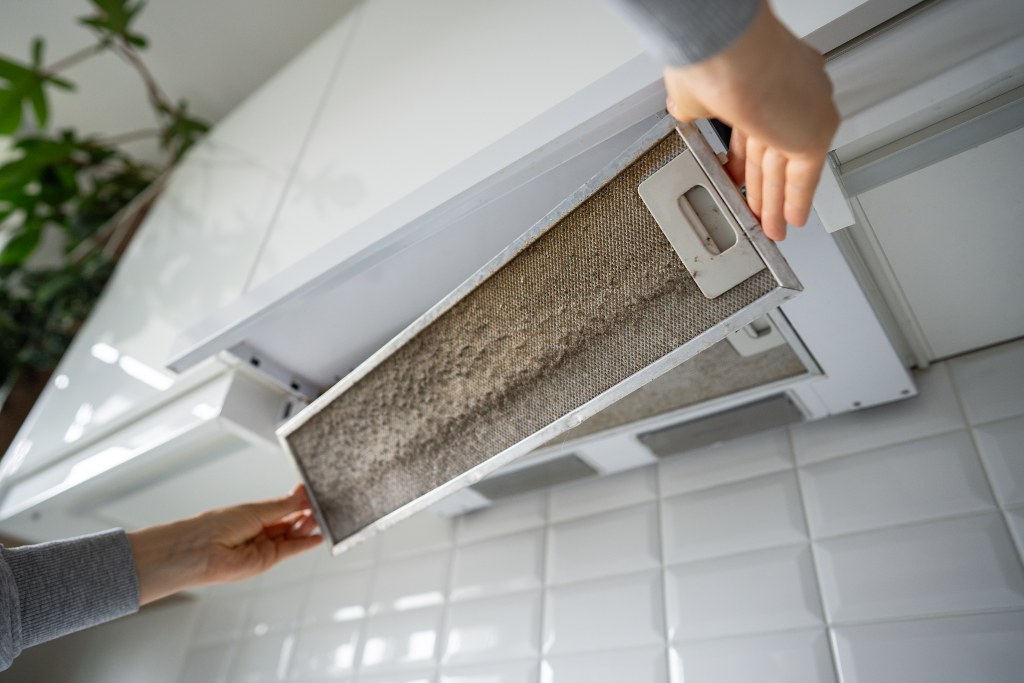
- Turn the extractor off and let the bulbs cool. They get hotter than you’d expect.
- Pop the filter out using the side clips or the slide catch. Some hoods have an indicator light that tells you when a clean is due, so check what your model does.
- Fill the sink with water as hot as your hands can stand, add washing-up liquid, and get the filter fully under.
- Leave it for 20 to 30 minutes. Longer if the grease is properly caked on. Go and do something else.
- Come back and scrub gently with the toothbrush, concentrating on the grooves in the mesh.
- Rinse until the water runs clear and there’s no soap left.
- Dry it fully before it goes back in.
On the dishwasher question, which comes up constantly: metal grease filters are generally fine on the hottest cycle, run on their own with no crockery in there. They sometimes come out slightly discoloured. That’s cosmetic and doesn’t affect anything.
Carbon filters are a different story. They work by absorbing odour until they’re full, and washing one just leaves you with a wet filter that still doesn’t work. Replace it.
The main thing with removing grease from extractor hood filters is patience during the soak. Scrubbing harder is the instinct, and it’s usually the wrong one.
If the hood has a symbol or reset button related to the filter, the guide to cooker hood symbols and filter light resets explains what each icon means and how to clear the warning once the filter is clean.
Cleaning the Fan Blades and Motor Housing
This is the part where being careful actually matters, because you’re now working next to the electrics. Water and force are both risks here.
Get the power off at the isolator or pull the plug, then check the manual to see if the blades are designed to come out at all. Plenty aren’t.
- Take the grease filters out to expose the fan assembly.
- If the manual says the blades are removable, unscrew them and note which way round they sit. They’re directional, and putting them back reversed is a classic mistake.
- Removable blades go in warm soapy water. Dishwasher only if the manufacturer specifically allows it.
- Fixed blades get wiped with a damp cloth or a soft toothbrush dipped in soapy water. Try a small area first.
- The motor casing gets a barely damp cloth and nothing more. Never let water pool anywhere near it.
- Dry everything properly, refit the filters, then restore power.
But if the motor still labours or refuses to start once it’s all back together, you’re past a cleaning problem. Something mechanical or electrical has failed, and you’re better off arranging professional extractor hood repairs than stripping the unit down any further.
At that point it is worth arranging professional extractor hood repairs rather than continuing to strip the unit down at home.
Stainless Steel Surfaces and Those Yellow Stains
Yellow patches on a stainless steel cooker hood come from oil vapour that heat off the hob has baked onto the surface. The metal underneath is usually untouched. And that’s good news, because baked-on oil comes away with patience rather than force.
- Turn the hood off and let it cool completely.
- Mix a teaspoon of bicarb with a little boiled water into a spreadable paste.
- Spread it over the yellowed areas and leave it for 15 to 20 minutes.
- Wipe it away with a damp cloth, always going with the grain of the steel. Go across it and you’ll leave scratch marks that catch the light forever.
- For anything that survives that, use a specialist stainless steel cleaner or a steel-safe oven cleaner on a soft cloth.
- Rinse, dry, then finish with a stainless steel polish.
Steer clear of scourers, and of anything with chlorine or bleach in it. Those will pit and dull the finish permanently, and there’s no fixing it afterwards.
For a broader routine covering hobs, ovens and other steel appliances, see the dedicated guide to stainless steel appliance cleaning and maintenance.
Baking Soda Versus Everything Else
Bicarb works because it’s mildly abrasive and alkaline enough to break down fat, but soft enough that it won’t mark most finishes. Commercial degreasers are faster on old, heavy deposits. The trade-off is fumes and a lot more rinsing.
Which one you reach for really depends on how bad the hood is and how delicate the surface is.
| Method | Best for | How it works |
|---|---|---|
| Baking soda paste | Light to moderate grease, delicate finishes | Mild abrasion plus alkalinity loosens grease gently |
| White vinegar rinse | Finishing touch, glass or steel shine | Acidity cuts through soap residue and light film |
| Commercial degreaser | Heavy, months-old or baked-on grease | Chemical solvents break down thick fat quickly |
| Hot soapy water soak | Removable filters and fan blades | Heat and detergent loosen grease before scrubbing |
The trick most people miss is combining them. Put the bicarb paste on, leave it, then spray warm vinegar over the top. It fizzes, and that reaction lifts the loosened grease so it wipes off with almost no pressure. Save the degreaser for whatever survives that.
And rinse properly afterwards, because dried chemical residue on a warm hood smells worse than the grease did.
How Often Should You Clean an Extractor Hood?
Depends entirely on how you cook. Someone frying most nights needs to do this far more often than a household living on the oven and the microwave.
As a working rule though: filters every one to three months, full deep clean of the fan and casing once or twice a year. Also: clean grease filters every two months with carbon filters swapped every four. Different manufacturers can stretch it slightly, with three months given as the benchmark for a thorough grease filter clean.
| Component | Typical cleaning interval |
|---|---|
| Metal grease filters | Every 1 to 3 months |
| Carbon/charcoal filters | Replace every 3 to 6 months (not washable) |
| Fan blades and interior | Every 2 to 3 months or during a deep clean |
| Exterior hood surface | Weekly wipe-down, deep clean quarterly |
Professional extractor hood servicing intervals vary a lot by model. But book Domes if the motor smells hot or if the extraction is still weak after you’ve cleaned everything properly. Same goes if the ducting can’t be reached safely from a step ladder.
When Cleaning Doesn’t Fix It
Sometimes you do the whole job and the kitchen still smells. That usually means the problem was never on the surfaces you just cleaned.
The first suspect is a carbon filter that’s saturated. People clean the metal grease filter, put it back and wonder why nothing improved, when the odour-absorbing filter behind it stopped working months ago. Check whether your hood has one. If it does, replace it.
Second suspect is the ducting. Grease travels up there, too, and no cloth reaches it.
For yellow staining that refuses to shift, the honest answer to how do you remove yellow stains from an extractor hood is to repeat the bicarb treatment across a few days rather than attacking it harder. Scouring will scratch the steel and dull glass, and you’ll have swapped a stain for damage.
One habit worth building: run the extractor for a few minutes before you start cooking and a few minutes after you finish. It clears the steam and airborne fat that would otherwise settle on the filters and the cupboard doors either side. It genuinely reduces how often you have to do all of the above.
But if you’ve replaced the carbon filter, cleaned everything and the problem persists, you’re looking at a blocked duct or a motor on its way out. That’s the point to get a qualified Domex engineer in.
Frequently Asked Questions
Can I clean the hood without taking the filters out?
You can wipe it and it’ll look better. But the grease that’s actually blocking the airflow is inside the filter mesh and on the blades behind it, so the filters have to come out before anything improves.
How do I know if my filter is metal or carbon?
Metal ones are rigid mesh or overlapping baffle panels, usually aluminium, and they clip into the underside of the hood. Carbon filters are darker and much lighter to hold. They sit further back as well, either behind the metal filter or wrapped around the motor on recirculating hoods. If you’re unsure, check the manual, because washing a carbon filter destroys it.
I cleaned the filters and it still smells. Why?
Almost always a saturated carbon filter that nobody’s replaced, or grease sitting up in the ducting. Deal with the carbon filter first, since it’s cheap and takes two minutes. If the smell survives that, look at the ductwork.
Is oven cleaner safe on a stainless steel hood?
A steel-safe one is, on a soft cloth, for stubborn yellowing. But standard caustic oven cleaner and anything containing chlorine will damage the finish. Read the label.
Can I put the filters in with the normal washing-up?
Run them on their own. The grease that comes off can redeposit on plates and glasses and the filters take up so much room that everything else washes badly anyway.
What actually happens if I never clean it?
Suction drops off gradually and smells start living in the room and the curtains. The motor burns itself out early too, because it’s fighting the resistance every time you switch it on. And a filter sitting directly over the hob, fully loaded with fat, is a genuine fire risk.
Should the extractor be on before I start cooking?
Yes, and leave it running afterwards. Switching it on a few minutes early and off a few minutes late clears the steam and fat that would otherwise settle everywhere. It’s the single easiest way to make the cleaning less frequent.
It’s louder since I cleaned it. What did I do?
Nine times out of 10 the fan blades went back the wrong way round, since they’re directional. A filter that hasn’t clicked fully home does the same thing. Kill the power, check the fitting against the manual and refit. But if it’s still loud after that, you’re hearing a worn bearing or motor mount, which was probably on its way anyway.
