Call Us
 Book a Repair
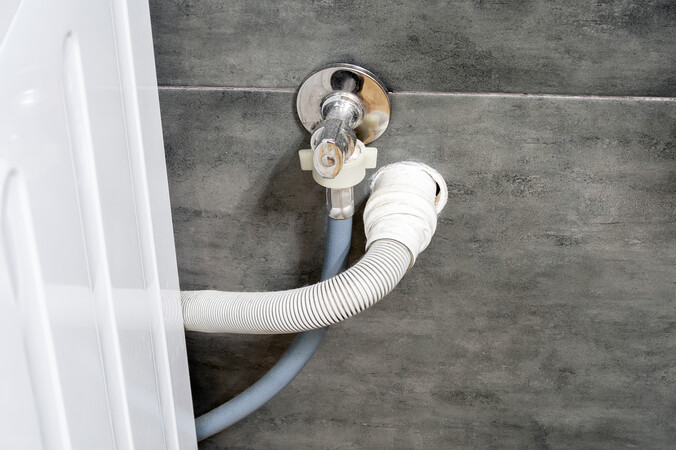

Washing machine water inlet pressure problems happens when the mains supply reaching the appliance drops below around 1–1.5 bar. The appliance needs to fill correctly with water within a certain time. Slow fills leads to timed-out cycles and fill-related error codes on brands such as Bosch, Samsung, Beko, and Miele and others.
UK water companies must supply a legal minimum of 1 bar to the property boundary, so genuine mains faults are less common than internal culprits like a partly closed stopcock, a restrictive saddle-clamp tap, scaled pipework, blocked inlet hose filter or a faulty inlet valve.
Working out whether the fault sits with the supply, the household plumbing or the machine itself is the first step toward a lasting repair rather than a repeat call-out.
If your washing machine has started taking far longer to fill, pausing mid-cycle or flashing up an error code it never used to show, you’re not imagining it.
Washing machine water pressure problems have become noticeably more common as manufacturers switch to electronically timed fill stages, and the cause can sit anywhere between the main stopcock and a single faulty component inside the appliance.
This guide works through the diagnosis step by step, from checking what “normal” pressure actually looks like to knowing exactly when the job needs a qualified engineer rather than a spanner and some patience.
Key Takeaways
- Today’s washing machines use software to monitor the water fill process rather than the old mechanical timers. If the water doesn’t reach the required level within a set timeframe, the machine aborts and shows an error code (such as Bosch’s E17/F17, Samsung’s 4E/4C, or Beko’s E08, Miele’s F10).
- Domestic washing machines typically need 1–1.5 bar of water pressure to fill properly. While UK water companies are legally required to supply at least 0.7–1 bar at the property boundary, home plumbing issues often reduce the pressure reaching the appliance.
- Low pressure is often caused by household factors, such as partially closed stopcocks, narrow/restrictive saddle-clamp taps, limescale buildup in older pipes, blocked inlet hose filter, kinked inlet hose or improperly positioned drain hoses that siphon water away mid-cycle.
- To test if your supply is adequate, time how long it takes to fill a 1-litre jug from the kitchen cold tap. Under seven seconds indicates healthy flow, while taking longer than 10 seconds points to low pressure or flow issues. For a more accurate check, you can use a water pressure gauge – 0 to 10 bar, available on the market.
- Inconsistent filling issues can be caused by internal faults like a clogged or damaged pressure switch/chamber or a failing inlet valve. If household supply and plumbing check out fine, an appliance engineer is needed to test these components (or adjust fill-time settings on select brands like Miele).
Introduction to Washing Machine Water Pressure Problems
Water pressure matters because the fill stage is the one part of a wash cycle a machine cannot simply skip or shorten.
Without enough force behind the incoming water, the drum never reaches the level the programme needs, and everything downstream of that point stalls.
It’s worth diagnosing the issue properly before booking an engineer because the cause could just as easily be a partially closed tap under the sink as a fault inside the appliance.
And fixing the wrong thing wastes both time and money.
This is an increasingly common complaint precisely because modern machines are built around software-controlled electronics rather than the simple mechanical timers of previous decades.
That shift changes how forgiving a machine is of a sluggish supply, which is why two washing machines on the exact same pipework can behave completely differently.
Broadly, the underlying cause falls into one of two camps.
One is a genuine fault with the mains supply or household plumbing. The second is a fault within the washing machine itself.
This is a distinction this guide explores in detail as we move from diagnosis through to repair.
What Counts as Normal Water Pressure for a Washing Machine
Most washing machines need a minimum of roughly 1 to 1.5 bar of water pressure to fill within their programmed time limit.
And typical UK mains supply comfortably exceeds this at somewhere between 1 and 3 bar under normal conditions.
Understanding what counts as normal is the essential first step before assuming a machine itself is faulty, because a great many why is my water pressure low complaints turn out to be well within an appliance’s stated operating range once actually measured.
Pressure is a legal, not just a technical, concept in the UK.
Under the Water Industry Act 1991, water companies in England and Wales are required to maintain a minimum pressure sufficient for water to reach the top-most storey of buildings in their area.
Water suppliers are required under the Water Industry Act 1991 to maintain a minimum mains water pressure of between 0.7 bar and 1 bar at the point where the supply pipe connects at the boundary connection point.
In practice this means that even a property at the very end of a long supply run is entitled to a baseline level of service, and persistent readings below this figure are a matter the supplier is obliged to investigate rather than something a homeowner has to simply accept.
It’s just as important to separate pressure from flow rate, since the two are routinely confused and a search about what causes low water pressure often turns out to be a flow problem in disguise.
This is essentially the difference between water pressure and water flow rate: pressure is the force pushing water through a pipe, expressed in bar, while flow rate is the actual volume delivered per minute, expressed in litres.
A property can register perfectly adequate static pressure at the mains yet still deliver a poor flow rate to a washing machine if the pipe feeding it is narrow, part-blocked, corroded or shared with other fittings, which is exactly why two tests, one for pressure and one for flow, are usually needed to get the full picture.
| Pressure range | What it typically means for a washing machine |
|---|---|
| Below 1 bar | Below the legal minimum for mains supply; likely to cause slow fills and fill-error codes |
| 1–1.5 bar | Borderline; usually adequate but can be marginal on machines with strict fill timeouts |
| 1.5–4 bar | Typical UK mains range; comfortable operating window for almost all domestic machines |
| Above 4–5 bar | Unusually high; rarely a fill problem but can stress hoses and valves over time |
Where a property sits within this range shapes everything else in this guide, so it’s worth treating this as the baseline reading against which every later symptom and test is measured.
Domex engineers are trained how to quickly identify the reason for the water fill faults. They are equipped with a water pressure gauge to check the on site water pressure and knowledge and equipment to check the appliance if the fault is with an internal component.
Why Modern Washing Machines Struggle More With Low Pressure
Modern washing machines struggle more with low pressure because their fill stage is governed by a timer running on the appliance’s control board, rather than by a mechanical system that simply waits until the drum is full.
This single design change explains why a supply that caused no problems for years can suddenly trigger repeated fill errors the moment an old machine is replaced with a new one.
Older washing machines used mechanical programme timers, where the timer motor physically paused during the fill stage and only resumed once the water level switch confirmed the drum had reached the correct level, however long that took.
A weak supply simply meant a longer wait, not a failure.
Today’s machines are run by a printed circuit board that treats the fill stage as a timed event: the electronics monitor the rising water level, and if the target level isn’t reached inside a preset window, the programme aborts and displays an error code rather than continuing to wait indefinitely.
This is precisely why some readers ask why does my washing machine takes so long to fill with water on one machine but never used to on the last one, even though nothing about the household plumbing has changed.
This timed approach exists for a good safety reason rather than being an arbitrary design limitation.
If a fill hose bursts, a valve sticks open or a major leak develops during filling, a machine with no timeout would simply keep pumping water into the drum indefinitely, risking serious flooding.
A fill-time limit lets the control board recognise that the water level isn’t rising as expected and stop the cycle before that happens.
The same timeout also catches a genuinely failed inlet valve that never opens at all.
Manufacturers set these limits with a safety margin in mind, but on a borderline supply that margin can be the difference between a machine that fills without complaint and one that repeatedly times out.
This is one of the more frustrating common causes of washing machine water pressure issues, and one that has nothing to do with the age or condition of the appliance itself and everything to do with how conservatively its fill timer has been calibrated.
Signs Your Washing Machine Is Affected by Low Water Pressure
The clearest sign your washing machine is affected by low water pressure is a fill stage that noticeably drags on longer than it used to, often followed by the cycle stopping altogether and an error code appearing on the display.
Recognising this pattern early helps rule out other, unrelated faults before any parts get replaced unnecessarily.
- Slow filling: the drum takes considerably longer than normal to reach the level needed for the wash to begin, even on programmes that used to start promptly.Fill-related error codes: the machine aborts partway through filling and displays a code specifically associated with water supply, rather than a drainage, heating or door-lock fault.
- Weak or intermittent flow into the drum: water can be heard or seen entering in a thin trickle, or in short bursts rather than a steady stream, when the door or drawer is checked during the fill stage. Powder detergent is not flashed in the drum from the detergent drawer.
- Overall wash cycles that run noticeably longer: repeated fill attempts by the control board can extend total programme time well beyond what’s printed on the dial or display.
- Slow seepage when the machine is switched off: a small but steady trickle of water into the drum between wash loads, even with the machine powered down, points to very low pressure preventing the inlet valve from sealing fully.
That last symptom deserves particular attention.
Inlet valves rely on a certain amount of pressure behind them to close completely; below roughly 0.5 bar, some valves cannot seal properly, allowing a slow seep of water past the valve and into the drum even when no cycle is running.
If you notice clean water accumulating overnight in an otherwise idle machine, this is one of the more specific symptoms worth investigating before assuming a faulty valve is automatically to blame.
The underlying pressure itself needs checking first.
Our washing machine water problems FAQ covers several related symptoms, including machines that won’t fill at all and how to check the supply connections behind the appliance.
How to Test Your Water Pressure at Home
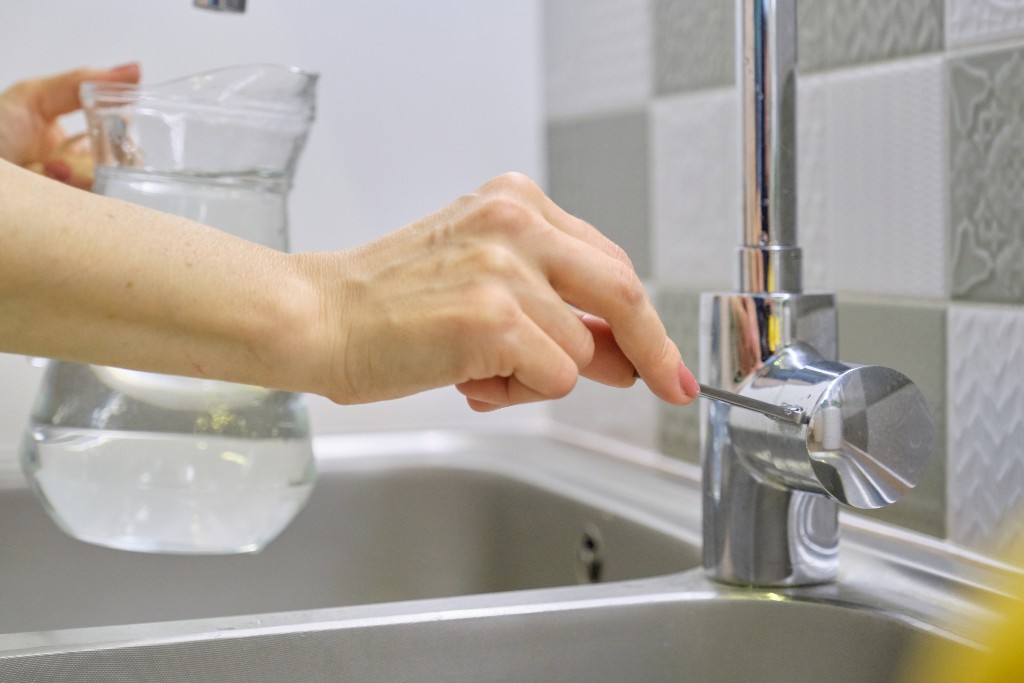
The simplest reliable way to test water pressure at home needs nothing more specialist than a one-litre jug and a stopwatch, and it takes only a couple of minutes to carry out at the kitchen cold tap.
- Turn off every other tap and water-using appliance in the property so nothing else is drawing from the supply during the test.
- Take a one-litre measuring jug to the kitchen cold tap, since this is normally fed directly from the mains rather than from a stored tank.
- Turn the tap on fully and time how long it takes to fill the jug to the one-litre mark.
- Under roughly seven seconds indicates a healthy flow, consistent with adequate mains pressure for a washing machine to fill normally.
- Between about six and 10 seconds is borderline, and worth repeating at a different time of day before drawing any conclusion.
- Over 10 seconds points to genuinely low pressure or flow that could well explain slow fills and fill-error codes.
One important caveat when interpreting the result: mains water pressure isn’t a fixed, unchanging number throughout the day.
It fluctuates with overall demand across the local network, and many areas see a noticeable dip during peak periods such as early mornings and early evenings, when large numbers of households are showering, cooking or running appliances at the same time.
A single test carried out at 07:00am that shows sluggish flow doesn’t necessarily mean the property has a permanent low-pressure fault
It may simply reflect a temporary peak in local demand and leave you wondering why is my water pressure low only at certain hours
For that reason, it’s worth repeating the jug test at both a busy time of day and a quieter off-peak time, such as mid-morning or late evening, before concluding anything is genuinely wrong
If the result is consistently poor regardless of when it’s tested, that’s a much stronger indication of a real underlying problem, whether that’s within the property’s own pipework or with the wider mains supply.
“The best and more accurate way of ruling out the main water supply pressure issue to the washing machine is to measure it with a water pressure gauge – 0 to 10 bar directly on the washing machine water tap. This will show the static pressure at that moment. With the water gauge still connected, it is good to run the kitchen cold tap fully and check the manometer readings again. This will show the dynamic pressure at the washing machine water tap, which shouldn’t drop below 1 bar.” — Nick – Senior Appliance Repair Engineer
Common Causes of Low Water Pressure in Your Home
Low water pressure throughout a home is most often caused by something inside the property rather than a genuine problem with the wider mains network
And working through the property-side possibilities first usually resolves the issue far faster than waiting for a water company to investigate.
- A partially closed stopcock: both the internal stopcock, usually under the kitchen sink, and the external stopcock at the property boundary can restrict flow throughout the house if not fully open, sometimes following recent plumbing work.
- Scaled or ageing pipework: older lead, iron or early copper pipework can accumulate limescale and corrosion internally over decades, progressively narrowing the effective bore of the pipe and reducing both pressure and flow.
- Shared supply pipes: many older terraced houses and converted flats share a single incoming supply pipe between several dwellings, meaning the available pressure is effectively divided between multiple properties.
- Hidden leaks: a slow leak concealed under floors, in walls, or underground between the meter and the property can quietly reduce the pressure reaching every fitting, often alongside an unexplained rise in water bills.
- Gravity-fed header tank systems: properties relying on a cold water tank in the loft need the base of that tank at least around 10 metres above the washing machine to generate 1 bar sufficient head pressure. Anything less and the machine may struggle to fill within its time limit regardless of how well the tank itself is maintained.
- Genuinely low mains pressure locally: some areas, particularly rural properties at the end of long supply runs or homes situated at higher elevations, receive mains pressure that sits close to or below the legal minimum even when everything on the property side is functioning correctly.
Upper-floor flats deserve a specific mention, since height above the water main naturally reduces available pressure the further up a building a property sits, and this effect compounds with any of the causes above.
A flat on the third floor of a converted Victorian house sharing a single supply pipe with the flats below it is, in effect, dealing with two separate pressure-reducing factors at once, which explains why loss of water pressure in a house often shows up first and most severely at the top of multi-storey properties.
If you find yourself asking why has my water pressure dropped after a period of it working fine, or wondering what causes low water pressure to appear seemingly overnight, establishing which of these factors applies is largely a process of elimination.
Checking both stopcocks, ruling out an obvious leak via the water meter and confirming whether neighbours experience the same drop in pressure all help narrow things down before assuming the washing machine itself is at fault.
Washing Machine Plumbing and Drainage Issues Affecting Pressure and Flow
How a washing machine is plumbed in can restrict the water reaching it just as effectively as a genuine mains fault. Getting the drain hose connection setup wrong can also cause water to siphon away mid-cycle. In a way that looks like a pressure problem but is actually a drainage one. Getting how to plumb in a washing machine right the first time avoids a whole category of faults that otherwise look identical to low-pressure symptoms.
Correct standpipe height and configuration matter more than most people realise, and this is a big part of what proper drainage for a washing machine comes down to.
A drain hose that sits too low in its standpipe, or a standpipe positioned outside the recommended height range, can allow water to be drawn back out of the drum by siphoning rather than staying where the wash cycle needs it.
The drain hose should sit loosely inside the standpipe with an air gap around it, never sealed in tightly, since that gap is what prevents the siphoning effect that would otherwise drain water away during the wash or rinse.
If a machine appears to lose water partway through a cycle that it was clearly filling correctly moments earlier, a badly positioned waste water pipe is a far more likely explanation than a mains pressure fault.
The type of tap feeding the machine also has a real effect on flow. Self-tapping saddle clamp taps, which are the kind that pierce a small hole directly into an existing copper pipe to create a new connection, are a common source of restricted flow, because the pierced hole is inherently narrow and rarely stays clean over time.
Replacing this style of tap with a proper isolating valve, fitted proximally, often improves the water reaching a washing machine considerably, even where the mains supply itself is perfectly adequate.
On the question of whether the washing machine tap should be on or off, it’s also worth checking that the cold tap feeding the machine is left fully open rather than only part-way.
A quarter-turn lever tap in particular can look fully open while actually being only partially clear internally, especially if it has become stiff or caked with debris.
A washing machine connection under the sink brings its own quirks, since the machine’s inlet and drain hoses often share space with the sink’s own plumbing, waste trap, and any dishwasher connection.Whe
re a shared waste pipe under the sink is undersized or poorly angled, it can restrict drainage from more than one appliance at once, which sometimes gets mistaken for a supply-side fill problem when it’s actually the drain side struggling to keep up.
For a closer look at hose-specific problems, including split or perished inlet hoses that reduce pressure at the valve, see our guide on washing machine hose leaks.
Drainage-specific symptoms such as water left in the drum at the end of a cycle are covered in more depth in our article on why a washing machine isn’t draining.
Pressure Switch and Inlet Valve Faults Inside the Machine
An internal fault with the pressure switch on a washing machine or its inlet valve can produce symptoms that look exactly like a mains pressure problem, which makes this one of the most common misdiagnosis points in the entire troubleshooting process.
The pressure switch sits toward the top of the machine and works by monitoring air pressure in a small chamber attached to the base of the drum.
As the drum fills, rising water pushes air up a connecting hose to the pressure switch, which signals the control board that the correct level has been reached and the wash can begin.
The same pressure switch later confirms when the drum has fully emptied so the spin cycle can start.
When old detergent residue or debris builds up inside the pressure switch chamber or hose, the switch can be fooled into registering the wrong water level, leading to overfilling, underfilling or a machine that refuses to spin because it still believes there’s water present.
Physical damage to the hose itself, often from rubbing against other components inside the cabinet, can produce similar symptoms, since a damaged hose prevents the pressure switch from accurately tracking the true water level in the drum.
ecause these faults produce underfilling, slow filling or apparent fill-error behaviour, they’re frequently mistaken for a genuine mains pressure issue, particularly when a homeowner has already ruled out the stopcock and tap.
The distinguishing clue is usually inconsistency: a mains pressure problem tends to behave the same way every time, whereas a pressure switch or chamber fault often produces erratic results like overfilling on one cycle, underfilling on the next or a spin cycle that sometimes runs and sometimes doesn’t.
Our guide on whether to turn off the water when the washing machine isn’t in use looks specifically at how a faulty pressure switch can prevent the inlet valve from shutting off correctly.
And the drainage-side consequences are explored further in our piece on washing machines that won’t drain properly, since a blocked pressure chamber can just as easily stop a machine emptying as it can stop it filling.
How to Fix Low Water Pressure Problems for Your Washing Machine
If you’re wondering how do I fix low water pressure to my washing machine, the answer usually starts with the simplest, cheapest checks and only escalates to equipment upgrades once those have been ruled out.
Working through the following steps in order avoids paying for a solution the property doesn’t actually need.
- Fully open both stopcocks: check the internal stopcock under the kitchen sink and the external stopcock at the boundary are turned completely open, not just partway.
- Check inlet hose: Check inlet hose and make sure it is not kinked or squashed. Check inlet hose and washing machine solenoid valve filters for blockages.
- Replace saddle clamp taps with proper isolating valves: where the machine is fed by a self-tapping saddle tap, having a plumber fit a correctly sized isolating valve instead can noticeably improve flow.
- Run wash cycles at off-peak times: if pressure is borderline rather than consistently poor, scheduling washes outside of local peak demand periods can be enough to let the machine fill within its time limit.
- Descale or replace corroded pipework: where scaling or corrosion inside older pipes is the identified cause, a plumber can assess whether a flush is sufficient or whether affected sections need replacing.
- Fit a pressure-activated booster pump where needed: for gravity-fed systems that can’t achieve the roughly 10 metres of head height required, a pressure-activated pump maintains system pressure even when no water is flowing.
That last point is worth emphasising, because it’s one of the more misunderstood common causes of washing machine water pressure issues.
A flow-activated pump, which is the type commonly fitted to boost shower performance, only switches on once water is already moving, and cannot maintain the steady pressure a washing machine’s inlet valve needs to close fully when idle.
pressure-activated pump, by contrast, keeps the whole system pressurised continuously, which is the correct type for resolving low-pressure faults linked to gravity-fed or header tank supplies.
Once the mains-side and plumbing-side fixes have been tried and the machine is still struggling, it’s a strong sign the fault lies within the appliance itself, most often the inlet valve or pressure switch discussed earlier, and at that point, further DIY intervention risks causing more damage than it resolves.
Brand Error Codes and When to Call a Professional Engineer
A water pressure issue stops being a DIY or plumbing job the moment the supply and connections have all been confirmed as adequate, yet the machine still won’t fill correctly.
At that point, the fault most likely lies with an internal component that needs a qualified engineer’s diagnostic tools to identify properly.
Most major manufacturers use a similar family of fill-related fault codes, though the exact letters and numbers vary by brand.
Bosch machines commonly display E17 or F17 when the water supply time has been exceeded during filling.
These error codes indicate that the water supply time has been exceeded.
Samsung machines typically show a 4E or 4C code for the same type of fault.
The 4E (4C) error code indicates that the washing machine has detected a problem with the water supply, and the water pressure must be between 0.5bar and 8bar.
Beko machines use an E08 code to flag the equivalent issue.
E08: Water filling error – the washer is unable to fill with water within the allocated time.
Miele machines generally require a minimum of around 1 bar and, notably, Miele engineers can sometimes adjust the fill-time allowance on certain models for households on a borderline low-pressure supply.
This is an option worth asking about directly if the property’s pressure genuinely can’t be improved.
| Brand | Common fill-fault code | What it generally indicates |
|---|---|---|
| Bosch | E17 / F17 | Water supply time exceeded during the fill stage |
| Samsung | 4E / 4C | Water supply problem, often low pressure or a restricted hose |
| Beko | E08 | Unable to fill with water within the allocated time |
| Miele | Fill fault, F10/no code override | Pressure below the machine’s minimum threshold; adjustable on some models by an engineer |
An experienced engineer distinguishes a genuine mains pressure shortfall from an internal valve or control board fault using diagnostic checks that simply aren’t available to a homeowner like testing the inlet valve’s electrical resistance, measuring actual flow directly at the valve inlet and interrogating the control board’s own fault history rather than relying on the displayed code alone.
As one of the largest independent domestic appliance servicing companies operating across London and into the Home Counties, Domex fields these calls regularly and, thanks to an outstanding first-time fix rate, resolves the majority of appliance-side pressure faults in a single visit, with same-day and next-day appointments available where needed.
If you’ve worked through the supply and plumbing checks in this guide and the fault persists, booking a professional washing machine repair is the quickest way to get a definitive answer.
Working through supply, plumbing, and appliance checks in that order takes the guesswork out of what can otherwise feel like an unpredictable fault, and it usually points quite clearly to whether the next step is a phone call to the water company, a job for a plumber or a booking with an appliance engineer.
Where the cause turns out to be internal to the machine, getting it looked at promptly avoids the problem recurring on every wash from here on.
Frequently Asked Questions
Can water pressure be too high for a washing machine?
Yes. While the conversation around water pressure usually centres on it being too low, excessively high mains pressure can stress hose connections, cause premature wear on inlet valves, and in some cases, produce a banging noise known as water hammer when valves close. Most machines are designed for a comfortable range roughly between 1 and 4 bar, and unusually high readings above this may warrant a pressure-reducing valve rather than a washing machine repair.
Should the cold tap always stay fully open?
Yes, the tap feeding a washing machine should be left fully open rather than only part-way, since even a slightly closed lever tap can meaningfully restrict flow and mimic a genuine low pressure fault. Quarter-turn taps in particular can appear open while still being partially restricted internally, so it’s worth physically confirming the lever has travelled its full range.
How quickly can a professional visit resolve the issue?
Once an engineer has confirmed whether the fault lies with the mains supply, the plumbing or an internal component such as the inlet valve or pressure switch, most appliance-side repairs are completed in a single visit, with genuinely external supply issues referred back to the local water company for further investigation.