
 Call Us
 Book a Repair
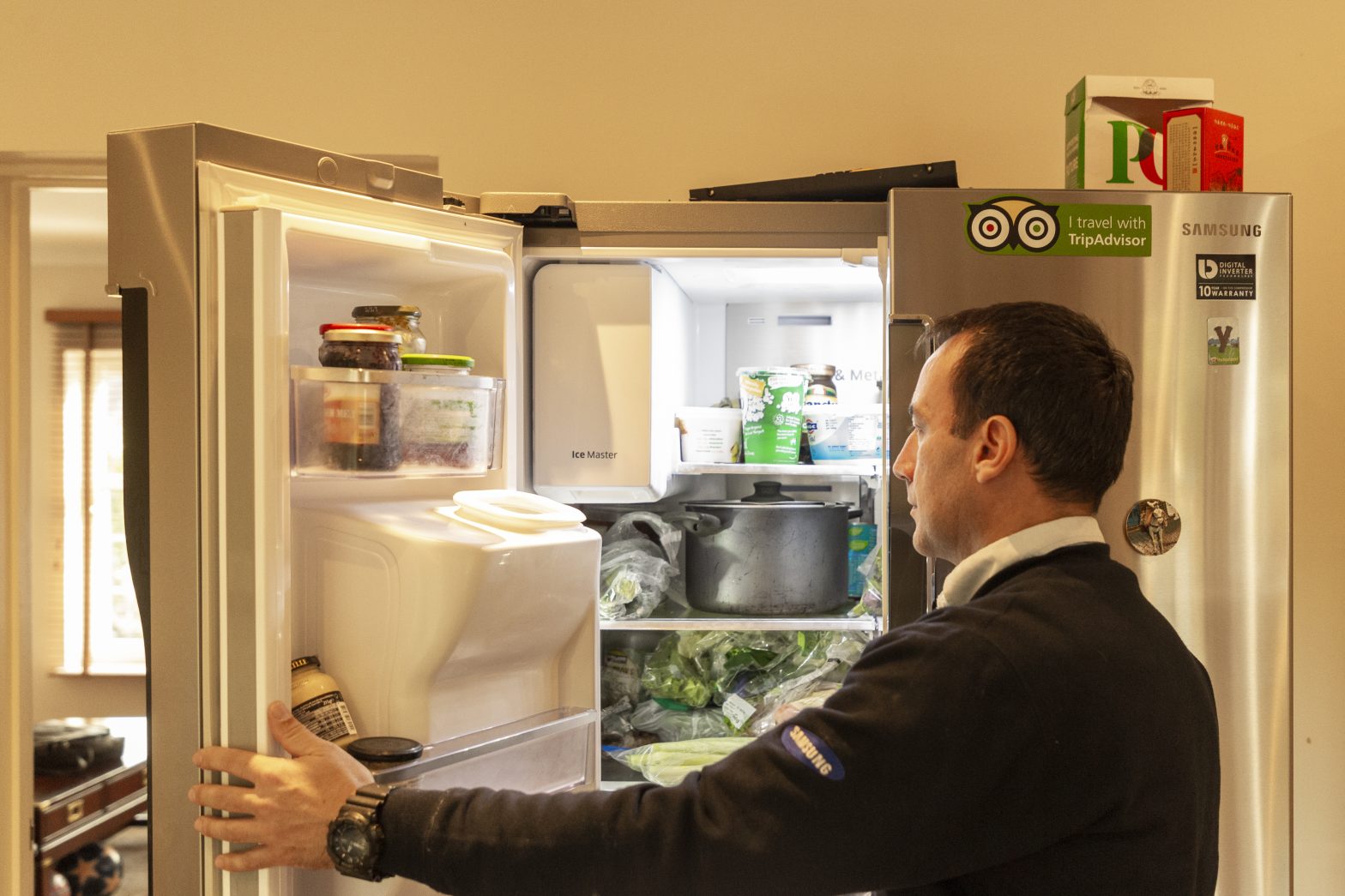

Fridge freezers hum, buzz and click because that’s what a compressor and a set of fans sound like when refrigerant is moving round a sealed system. A healthy one sits somewhere around 32 to 47 decibels while it’s running, which is roughly the volume of a quiet conversation two rooms away.
The noise matters when it turns into banging or grinding, or when the compressor stops cycling off and just runs. Most of the time the cause is dull. An appliance that isn’t level, condenser coils packed with dust, a fan on its way out.
And most of those you can sort yourself in under half an hour. But persistent grinding, a burning smell or a fridge that’s stopped keeping food cold all need an engineer rather than more poking about.
A fridge freezer that suddenly sounds different is unsettling, particularly when the change happens overnight or gets worse by the day.
The reassuring bit is that nearly every kitchen refrigeration appliance makes noise as a normal part of working, and only a small slice of noise complaints turn out to be an actual fault.
This guide covers what normal sounds like, what buzzing and a constantly running compressor usually mean, the mechanical causes behind rattling and clicking, and the checks worth doing before you pick up the phone.
Key Takeaways
- Some noise is the appliance doing its job. Compressors, fans and refrigerant flow all make sound. Silence would be the odd outcome.
- Steady is fine. Worsening isn’t. Gentle hums and occasional clicks are normal. Banging, metallic grinding and anything that gets louder day by day are worth investigating.
- Buzzing is usually the compressor or the condenser fan. But a compressor that never switches off points at dirty coils or restricted airflow around the unit.
- Rattling has a short list of suspects. An unlevel appliance and a loose drain pan account for most of it, with dirty coils and a failing evaporator fan behind the rest.
- Five checks solve the majority of complaints. Level it, clean the coils, and work through the rest below. But stop and book an engineer if there’s a burning smell or the food isn’t staying cold.
Why Is My Fridge Making a Noise?
Nine times out of ten, a fridge making a noise is simply running.
There’s a compressor pumping refrigerant round a sealed circuit, fans pushing cold air between the fridge and freezer compartments, and a defrost cycle that kicks in periodically to clear ice off the evaporator.
Every one of those makes a sound. A low hum, a soft whirr, the occasional trickle of water inside the cabinet. None of it means anything on its own.
What throws people is that the volume changes over time. Bearings and seals wear, so an eight-year-old appliance genuinely does run louder than it did new.
And where the fridge sits matters more than most people expect. A warm kitchen, a tight alcove, hard tiled flooring underneath. All of them make the same sound carry further.
Model design comes into it, too. Compressor type, insulation thickness and fan placement vary between manufacturers, and often between ranges from the same brand.
The rest of this guide separates the normal noises from the ones worth acting on.
For a wider look at other common issues, this overview of common fridge freezer problems covers faults beyond noise alone.
Normal vs Abnormal Fridge Freezer Noise
The quickest test is direction of travel. A normal noise stays roughly the same week to week. An abnormal one gets worse.
A healthy fridge freezer gives you a consistent low hum from the compressor and a gentle whirring from the fans.
There’ll be the occasional click as the thermostat or defrost timer switches over, plus short bursts of water-flow sound as refrigerant moves through the system. These come and go all day. What they don’t do is climb.
Abnormal is a different register entirely. Loud banging, metallic grinding, high-pitched screeching, or a rattle that’s noticeably worse on Thursday than it was on Monday.
Sustained noise well above typical operating levels is worth investigating, and anything above roughly 45 to 50 decibels may need a professional assessment.
One exception worth knowing about: a brand-new fridge freezer often sounds louder than an established one for the first few days after installation, while compressor oil circulates and components bed in. That settles on its own. Leave it alone.
| Noise Type | Normal or Abnormal | What It Usually Means |
|---|---|---|
| Steady low hum | Normal | Compressor running during its cycle |
| Gentle whirring | Normal | Condenser or evaporator fan circulating air |
| Occasional click | Normal | Thermostat or defrost timer switching |
| Brief water-flow or trickle | Normal | Refrigerant or defrost water moving through the system |
| Loud banging or grinding | Abnormal | Loose or failing mechanical component |
| High-pitched screeching | Abnormal | Fan motor or bearing wear |
| Noise that steadily worsens | Abnormal | Progressive mechanical fault needing inspection |
Decoding the Noises: Buzzing, Humming and Compressor Noise
Each of these points at a different part of the system, and telling them apart saves a lot of unnecessary worry.
A soft, steady buzz or hum is nearly always the compressor cycling or the condenser fan spinning away at the back. Both are meant to happen, and both come and go as the thermostat calls for cooling.
When the buzzing is louder than it should be, the usual culprit is vibration transferring into something solid. A rear panel touching the wall, the appliance sitting against a cabinet, a foot resting slightly proud of the floor.
Shifting the unit a few centimetres or adjusting the feet normally kills it.
The one to pay attention to is a compressor that runs for unusually long stretches and never seems to cycle off.
Persistent compressor noise on a fridge can indicate a refrigerant problem inside the sealed system or a motor starting to fail. Far more often though, it means the compressor is working harder than it should because heat can’t escape.
Dust and pet hair coat the condenser coil, the coil stops dissipating heat efficiently, and the compressor has to run longer to hit the set temperature. HVAC research suggests coil build-up can push energy consumption up by around 30%.
A longer run isn’t automatically a problem, mind you. Compressors work harder in some conditions and that’s expected:
- Soft buzzing. Compressor or condenser fan operating normally during a cooling cycle.
- Humming that rises and falls. Refrigerant moving through the system. Harmless.
- Buzzing against a surface. The unit is vibrating against a wall or a nearby cabinet.
- A compressor that never stops. Possible refrigerant issue or failing motor, though restricted airflow from a dirty condenser is the more likely answer.
- Longer runs in warm weather. Extra workload rather than a fault, and the same applies after a big shop or a day of the door being opened constantly.
For a deeper breakdown of what individual fridge freezer sounds might mean, this dedicated guide on why your fridge is making a noise covers thermostat, compressor and fan faults in more detail.
Common Causes of a Noisy Fridge Freezer: Rattling, Clicking and the Rest
Rattling, clicking, squealing and scraping almost always trace back to a short list of mechanical or installation issues. Work down it roughly in order of likelihood and you’ll usually find the culprit quickly.
- An unlevel appliance. If the fridge freezer isn’t sitting flat, vibration from the compressor transfers into the floor and the surrounding cabinetry. The rattle tends to get worse over time as the feet settle further.
- A loose or misaligned drain pan. The defrost drain pan sits underneath most fridge freezers and rattles against the compressor or the cabinet base once it slips out of position. Very common, and easily fixed.
- Dirty or obstructed condenser coils. Coils clogged with dust and pet hair make the fan work harder, and it starts to sound rougher. This is a frequent source of condenser fan noise in a fridge freezer.
- A faulty evaporator fan. Ice build-up or stray debris inside the freezer compartment catches the fan blade, which produces a repetitive clicking or a squeal.
- Items touching the panels. Food packaging, a shelf that’s not seated properly, a bottle leaning against the back wall. Any of these will amplify normal vibration into something that sounds like a fault.
- Water line issues. On models with an ice maker or a water dispenser, air or debris in the supply line causes clicking and gurgling as water is drawn through.
Frost-free models are particularly prone to fan-related clicking, since they rely on an extra evaporator fan and an automatic defrost heater to keep ice off the coil. When ice does form despite that, the fan is usually the first thing to catch it.
For model-specific guidance, this article on common frost-free fridge freezer problems in Miele appliances explains how the compressor, fan, condenser and evaporator coils can each contribute to noise.
Start with levelling and the drain pan before you move on to coils and fans. Both are quick, and between them they account for a large share of call-outs that turn out not to need an engineer at all.
How Do I Stop My Fridge Freezer From Making Noise?
Most people asking how do I stop my fridge freezer from making noise can quieten things down with a short run of checks. No special tools, under half an hour, and it clears the majority of everyday complaints.
- Level the appliance. Put a spirit level on top and adjust the front feet, plus the rear ones on models that have them, until it sits flat both ways. This is the single most common cause of rattling, and it’s the cheapest to rule out.
- Check the ventilation clearances. Match the gaps at the back, sides and top to whatever the manual specifies. And make sure nothing is physically touching the cabinet, because every contact point transmits vibration straight into the kitchen units.
- Reseat the drain pan. If it’s come loose, slide it back into position underneath. A pan sitting slightly out of place will knock against the compressor every time it starts.
- Clean the condenser coils. Unplug the appliance first, then vacuum or brush the dust and fluff off the coils at the back or underneath. Clear coils let heat escape properly, which means the compressor runs less.
- Check the fans for obstructions. With the appliance still unplugged, look inside the freezer compartment and behind the interior panels for ice or a dislodged part catching the evaporator fan blade. Clear carefully.
Those five deal with the bulk of noise complaints without anyone needing to come out.
If a freezer compartment specifically keeps making clicking or grinding noises after these steps, it may point to a fault within the sealed system, in which case a dedicated freezer repairs service can diagnose the fan or compressor directly.
When Should I Worry About Fridge Noise?
It comes down to what the noise does after the basic checks, and what else is happening alongside it.
Loud banging or metallic grinding that survives levelling, coil cleaning and a fan inspection is a genuine mechanical fault. That’s the point where more DIY starts costing you rather than saving you.
Some things skip the checks entirely and go straight to a call:
- A burning or scorched smell alongside the noise
- The appliance no longer keeping food properly cold
- Water or refrigerant leaking from the unit
Before booking anything, put a thermometer in the fridge compartment and check it’s actually holding a safe temperature. Noise combined with poor cooling usually means both symptoms share one cause, and knowing that up front makes the diagnosis faster.
A qualified engineer can work out what’s actually failed, which might be an evaporator fan, a compressor or something else in the sealed system. They can also confirm the appliance is running safely once it’s fixed.
Domex’s fridge freezer repair service covers exactly this kind of diagnosis for most makes and models.
Frequently Asked Questions
Is it normal for a new fridge to be loud?
Yes, briefly. New fridge freezers often sound louder than expected for the first few days while compressor oil circulates and everything settles. It fades on its own, and there’s nothing to adjust.
Can a loud fridge increase my electricity bill?
Often, yes. A compressor running longer than it needs to uses more power, and dirty condenser coils are the usual reason it’s running longer. Restricted heat exchange forces it to work overtime for the same internal temperature.
How can I reduce everyday fridge freezer noise?
Get it level, leave the manufacturer’s recommended clearance at the back and sides, and clean the condenser coils every few months. That last one is the job everybody skips, and it makes the biggest difference.
When should I call someone rather than trying a DIY fix?
Once you’ve levelled it and cleaned the coils and the noise is still there or getting worse. And go straight to booking if there’s a burning smell, a leak, or food that isn’t staying cold.
