Call Us
 Book a Repair

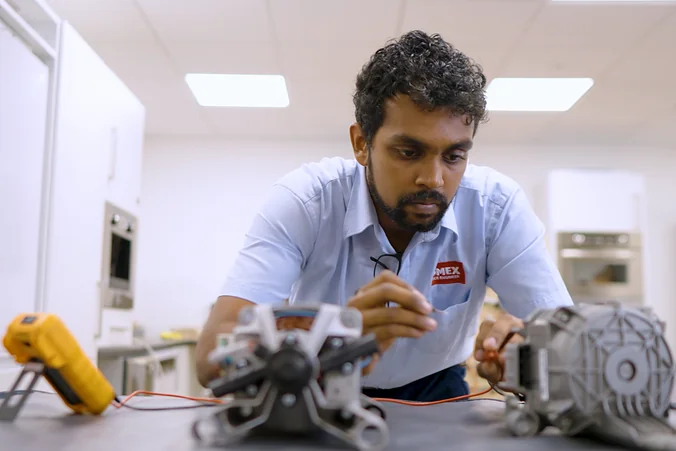

Deciding between repairing and replacing a broken appliance usually comes down to one quick calculation: comparing the repair quote against half the price of a new model, then checking that figure against the machine’s age and condition.
In my years working alongside Domex engineers, I have found that a repair under 50% of replacement cost on an appliance still within its expected lifespan is almost always worth doing.
Once a machine is older or has failed repeatedly, buying a new one usually works out cheaper over time. And the same goes for any fault that needs a major part such as a motor or a compressor.
A washing machine that stops mid-cycle or a fridge that stops cooling always seems to happen at the worst possible moment. And I know how quickly that stress turns into a bigger question: call an engineer or start browsing for a replacement?
Across the countless call-outs our team has handled, I have noticed the same handful of factors decide the answer every time.
In this guide, I work through those factors appliance by appliance. Along the way, I set out the costs involved and the warning signs worth trusting.
Key Takeaways
- Cost, like-for-like fit, age, safety and warranty cover are the five factors that decide most repair or replace decisions.
- The 50/50 rule, checking a repair quote against half the price of a new appliance, works best alongside an age check.
- Repeated breakdowns, rising noise, discontinued parts and visible corrosion are reliable signs an appliance is nearing the end of its life.
- Gas smells, sparks, scorch marks or a burning odour mean stopping use immediately, regardless of cost.
- Routine maintenance and professional installation can extend an appliance’s useful life well beyond its average lifespan.
Your Repair or Replace Appliance Guide: Key Decision Factors
When a household appliance breaks down, the decision to repair or replace rests on five core factors:
- How the repair cost compares with a new appliance
- Whether a like-for-like replacement would fit without altering the kitchen or utility room
- How old the machine already is
- Whether there is a genuine safety concern
- Whether an existing warranty already covers the fault
I treat these checks as the backbone of every repair or replace appliance guide I give customers. That’s because weighing them together almost always points to a clear answer rather than a guess.
Working through a breakdown properly means following a short roadmap.
Start with a few diagnostic checks at home, apply the 50/50 rule as a quick cost filter, compare the result against typical lifespan data and then look at appliance repair versus replacement decision costs for your specific machine before weighing up the environmental side of the choice.
Deciding between appliance repair and replacement has become less obvious than it once was, because today’s machines blend mechanical components with circuit boards and sensors.
A fault that once meant swapping a simple belt can now mean diagnosing a failed control board instead, which changes both the likely cost and the skill needed to fix it.
What factors determine the repair or replace decision for appliances will shift slightly from one machine to the next, but the underlying logic rarely changes.
You can read about our domestic appliance repairs service to see how a fixed-price diagnostic visit fits into that roadmap before you take out your wallet.
DIY Appliance Repair Safety Tips Explained
Before booking an engineer, there are simple checks a homeowner can safely carry out at home.
Starting here can save a call-out fee entirely, provided nothing about the fault points to a genuine safety risk.
Check that filters and seals are clear of debris and that plugs are seated firmly in their sockets.
It is also worth confirming that the power supply has not tripped at the consumer unit.
Error codes on the appliance’s control panel are worth noting down or photographing, as they often point an engineer straight to the fault instead of requiring a lengthy diagnosis on arrival.
Before any of this, it helps to confirm exactly which model you own.
Our guide on finding your appliance’s model and serial number is useful here, because the correct details speed up both troubleshooting and any parts order.
IMPORTANT NOTE: None of these DIY appliance repair safety tips apply once there is any smell of gas, a carbon monoxide alarm going off, visible sparks, scorch marks or a burning smell.
“Any hint of burning or a gas odour means switching the appliance off at the wall, isolating the water or gas supply, if it is safe to do so, and calling a qualified engineer straight away because no repair saving is worth the risk,” according to Nick, one of our experts at Domex.
This single rule overrides every other cost calculation in this guide.
Signs an Appliance Needs Replacing
Certain warning signs tell you an appliance is nearing the end of its useful life well before it fails completely.
In my experience, the answer to “how do you know if an appliance is worth repairing?” comes down to spotting the following patterns early instead of waiting for a total breakdown.
- Repeated call-outs: two or more call-outs within 12 months for the same or related faults suggest the machine is wearing out as a whole system rather than suffering an isolated fault.
- Rising noise or vibration: growing noise or vibration during a cycle is one compounding sign that repair is becoming less sensible with each passing month.
- Corrosion and hard-to-find parts: visible corrosion on the chassis or drum, and difficulty sourcing spare parts for an older or discontinued model, push the decision further towards replacement.
- Corroded microwave or oven cavity: rust inside the cooking cavity is rarely economical to put right and usually means the appliance is due for replacement.
The question “when should you replace an appliance instead of repairing it?” is rarely settled by a single factor. It tends to be the appearance of these signs together that tips the balance.
That said, a discontinued part does not always mean the end of the road.
Sometimes the fault sits in a smaller component that an engineer willing to look beyond the obvious can still repair or source a substitute for, which is worth remembering before you write an appliance off entirely.
What Is the 50/50 Rule for Appliance Repairs?
The 50/50 rule is a quick first filter that compares a repair quote against half the price of a comparable new appliance.
And this is your single most useful shortcut in this guide. Under that threshold, repairing is usually the better financial move. Above it, replacement tends to make more sense.
The calculation is simple to apply in practice:
Repair cost ÷ new appliance price × 100 = % of replacement value spent on the fix
Take a worked UK example: a £150 repair quote on a washing machine that would cost £350 purchased new works out at roughly 43% of the replacement price. So, repairing clears the 50% threshold comfortably.
In contrast, a £220 quote on that same £350 machine sits at 63%, which points firmly toward buying a new one instead.
The 50% rule for appliance repair is not meant to be used in isolation, though. It works best alongside an age check.
A machine well past its expected lifespan can clear the cost threshold and still be a poor investment, simply because another part is likely to fail soon after the first repair is done.
I treat the rule of thumb for repairing or replacing appliances as a starting point for the cost-benefit of repairing versus replacing appliances. The age check then sharpens the answer.
Average Lifespan of Home Appliances
The answer to “how long should a washing machine last before replacing?” depends on the model and how it has been used and maintained.
But UK households can generally expect a working lifespan of somewhere between eight and 10 years from a washing machine, with other appliances lasting longer or shorter, depending on how hard they work.
| Appliance | Typical UK lifespan | When repair becomes harder to justify |
|---|---|---|
| Washing machine | 8 to 10 years | Once past 8 years, major part failures tend to favour replacement |
| Fridge freezer | 10 to 15 years | Compressor or sealed-system faults near the upper end rarely pay back |
| Dishwasher | 9 to 10 years | Control board failure near this age usually tips toward a new unit |
| Oven | 10 to 15 years | Element and thermostat faults repair well throughout this range |
| Tumble dryer | 10 to 13 years | Heat pump sealed-system faults near the upper end favour replacement |
NOTE: These figures assume reasonably normal use and a correctly fitted appliance.
Poor installation, such as an unlevelled washing machine or a fridge pushed hard against a wall with no ventilation gap, can noticeably shorten any of these spans, sometimes by several years.
That is why I treat the average lifespan of home appliances as a guide rather than a guarantee.
It works far better as a decision tool once combined with the 50/50 rule I mentioned above.
Typical Cost for Appliance Repair by Fault
A typical UK call-out for an appliance repair combines a fixed visit fee with charges for the work itself.
And understanding this structure makes any quote much easier to judge fairly.
- Call-out fee: generally £60 to £100, sometimes waived or offset against the repair cost.
- Labour: typically £50 to £90 per hour, depending on the appliance and region.
- Pumps and motors: parts alone often range from roughly £40 up to £300 for larger motors.
- Control boards (PCBs): these are among the pricier components, and often cost £100 to £250 before labour.
- Heating elements: usually one of the cheaper fixes, and often cost in the region of £30 to £80 for the part itself.
The cost for appliance repair varies by region as well as by fault.
London and the South East tend to run higher than other parts of the UK, often by a noticeable margin once labour and travel time are factored in, so a quote that looks high in isolation may simply reflect local rates rather than an inflated job.
Getting a written, all-in price before work begins is still the best way to avoid surprises once the engineer is at your home.
Example 1: Washing Machine Repair Costs by Common Faults
Washing machine repair cost depends heavily on which part has failed.
And the gap between a cheap fix and an expensive one is wide.
At the affordable end, door seals and drive belts generally cost less than £100 in parts before labour is added. Carbon motor brushes sit in that same bracket.
- Door seal or gasket: a cheap, common fix for leaks around the drum opening.
- Drain pump: a mid-range repair, usually straightforward for an engineer to access.
- Control board (PCB): one of the costlier repairs, reflecting the complexity of the part.
- Drum bearings or spider arm: among the most expensive single-fault repairs on most machines.
- Motor replacement: typically the highest single-part cost on a washing machine.
Stacking repairs on one machine is where the maths changes.
A door seal fixed last year followed by a drum bearing repair this year can, combined, start to approach a meaningful share of a replacement unit’s price, even though each job looked reasonable on its own.
Our washing machine repair service page breaks down typical faults by brand if you want a closer look at what a specific symptom tends to cost.
Is it worth repairing a washing machine?
The answer to “is it worth repairing washing machine problems?” comes down to combining the 50/50 rule with the machine’s age and the severity of the specific fault, rather than looking at the quote alone.
A door seal or pump repair on a machine under five years old is almost always worth doing, since the cost is modest and the rest of the appliance still has plenty of life left.
But a drum bearing or control board (PCB) failure on a machine already past eight years tends to tip the balance towards replacement.
That’s because both repairs are relatively expensive and often signal that other components are close behind.
“When we see a bearing failure on an older drum, we tell customers honestly that a second major fault within a year or two is common, so the maths rarely favours fixing it twice,” according to Andrei, one of our washing machine experts here at Domex.
Put simply, the fault type and the machine’s age together tell you far more than the cost rule can on its own.
Example 2: Is It Cheaper to Repair or Replace a Fridge and Other Appliances?
The answer to “is it cheaper to repair or replace a fridge?” depends almost entirely on which part has failed, since fridges, dishwashers, ovens and dryers each have their own pattern of worthwhile and unworthwhile repairs.
Compressor or sealed-system faults on an older fridge are rarely economical to fix because the part itself is costly and the appliance has usually used up a large share of its expected lifespan by the time this fault appears.
On the other hand, a thermostat or door seal repair is almost always worth doing on a fridge of any reasonable age.
Dishwasher door seal and pump repairs tend to be worthwhile across most of the appliance’s life, as both parts are relatively inexpensive to source and fit.
Oven elements and thermostats are usually affordable and rarely justify replacing an otherwise sound cooker. A failed control board on an older oven is a different story, and it often pushes the decision towards a new unit.
Tumble dryers follow a similar pattern to washing machines: heating elements and belts repair well and are usually inexpensive, but drum bearing jobs often do not represent good value once the machine is older, particularly on heat pump models where the sealed system is expensive to open up.
Our oven repair service covers the element and thermostat faults mentioned here in more depth, alongside guidance on when a cooker fault points towards replacement instead.
Explaining Warranty Coverage for Appliance Repairs
Before paying for any repair, it is worth checking what cover you already have, as several routes can reduce the cost or remove it entirely.
Warranty coverage for appliance repairs typically starts with the manufacturer’s own guarantee, which usually runs for one to two years from purchase and covers most faults at no cost.
Beyond that, a paid extended warranty or care plan can continue to offer cover for several more years.
Section 75 protection on a qualifying credit card purchase may also apply if certain conditions are met, and some home insurance policies include appliance cover as an add-on.
Extended warranty versus appliance replacement becomes a genuine question once the annual cost of ongoing cover starts to approach a meaningful share of the appliance’s replacement value, at which point it may make more sense to put that money towards a new model instead.
Our Repair & Protect service plan sets out clearly what happens if an appliance is ever found to be beyond economic repair while under cover.
Energy Efficiency of New Appliances vs. Older Appliances
Energy efficiency of new appliances versus old ones can change the economics of a repair decision because an older machine’s running cost sits alongside the repair bill rather than apart from it.
Recent changes to UK energy labelling have made it easier to compare models directly.
And the gap between an older washing machine and a current efficient model can be substantial over a year of normal use.
As a rough illustration, an older machine costing around £85 a year to run against a newer one costing closer to £50 leaves a yearly saving in the region of £35, which adds up to several hundred pounds over a decade of ownership.
Where a repair quote already sits close to the 50% threshold, that ongoing saving can be the detail that nudges the decision towards replacing rather than repairing, as the new appliance effectively starts paying back part of its purchase price from day one.
Appliance Maintenance to Extend Lifespan
Appliance maintenance to extend its lifespan is one of the simplest ways to put off the repair or replace decision altogether, often by several years.
Descaling a washing machine, dishwasher or steam oven regularly prevents limescale from damaging heating elements and pumps, while cleaning filters and door seals stops debris building up into bigger mechanical faults.
Not overloading an appliance reduces strain on the motor and bearings, as well as on the belts, which noticeably extends their working life.
Also, professional installation plays a bigger role than many people expect.
As I mentioned earlier, an unlevelled washing machine or a poorly ventilated fridge is far more likely to fail early, so getting a new appliance fitted correctly from day one reduces the risk of avoidable faults.
A maintenance or care plan can widen the window before a repair becomes uneconomical, as small issues get caught and fixed before they escalate into the kind of major part failure that tips an appliance towards replacement.
Finding a Reliable Appliance Repair Technician
Finding a reliable appliance repair technician starts with checking accreditation, as manufacturer-approved service centres and brand-trained engineers are far more likely to diagnose a fault correctly on the first visit and fit genuine parts instead of cheaper substitutes.
Domex has operated as an approved service centre for major brands including Beko, Hisense, Bora, Hotpoint, Miele, Whirlpool and many others since 2003.
Our team of more than 70 engineers covers London and the South East. And we also reach parts of the Midlands such as Leicester and Nottingham.
Same-day appliance repair bookings and next-day visits are available, alongside weekend appointments and online repair tracking through the My Repair system, which allows you to see exactly where your booking stands without chasing a call centre.
Case Study: De Dietrich downdraft extractor: Component repair or full replacement?
A De Dietrich downdraft extractor had stopped rising from the worktop entirely, and because De Dietrich’s parent companies have been through repeated insolvencies, original motor assemblies for older units were simply no longer made.
Rather than telling the customer that a full extractor replacement was the only option, our Domex engineer stripped the mechanism down to component level and found that the motor itself was sound. The actual fault sat in damaged end-position micro-switches, which was a far cheaper part that could still be sourced online.
We offered the customer a choice between a full replacement and a targeted repair using those replacement switches. They chose the latter.
Once the switches arrived, we used the job as a training exercise, sending a senior supervisor and a newly joined trainee to fit and calibrate them together. The extractor rose smoothly from the worktop again, and the customer kept a fully working kitchen without the cost of a new appliance.
“Experience matters most on the jobs that look unrepairable at first glance because a willingness to strip a fault down to component level often reveals a far cheaper fix than anyone expected,” as Nick, one of our experts at Domex put it.
Book an appliance repair engineer through an accredited provider like Domex and you reduce the chance of being told a machine is beyond saving when a smaller, targeted repair is available.
Environmental Impact of Replacing Appliances
The environmental impact of replacing appliances is easy to overlook when you’re focused on cost alone.
But manufacturing a new appliance carries a real embodied carbon cost before it even reaches your kitchen.
Raw materials have to be mined before global shipping and energy-intensive assembly even begin. All of that adds up well before the appliance is switched on for the first time.
UK right to repair rules have made repair a more viable choice than it used to be, since manufacturers of appliances such as washing machines and dishwashers are now required to make spare parts available for up to 10 years after a model leaves the market, dropping to around seven years for refrigeration appliances.
When an appliance does reach the end of its life, responsible disposal matters, too.
Retailers are required to offer a free like-for-like take-back service when you buy a replacement, typically allowing you to hand back the old unit within 28 days of the new purchase, alongside the option of using a local household waste recycling centre.
These appliance recycling options when replacing help divert old units away from landfill and recover usable materials that would otherwise be wasted.
Supporters of the right to repair movement argue it could meaningfully cut into the roughly 1.5 million tonnes of electrical waste the UK generates each year, simply by keeping more appliances in service for longer.
Where a fault is safe and affordable to fix, choosing repair over replacement remains the lower-impact option in most cases, with replacement reserved for appliances that are genuinely at the end of their useful life or significantly less efficient than a modern equivalent.
In Short
Weighing cost, age, safety and warranty together rarely leaves a repair or replace decision as finely balanced as it first appears.
Most households find that a quick diagnostic check and the 50/50 rule, backed by a glance at typical appliance lifespans, settle the question within minutes.
If you are facing a breakdown right now, an honest, fixed-price diagnosis from an accredited engineer like Domex is the fastest way to turn that uncertainty into a clear next step.
Frequently Asked Questions
Is it always cheaper to repair than replace an appliance?
Not always. A cheap, isolated fault on a younger appliance is usually cheaper to repair, but a major part failure on an older machine can cost close to, or more than, half the price of a new one.
How do I know if my appliance repair is covered by warranty?
Check the original purchase date against the manufacturer’s stated guarantee period, then look for any extended warranty, care plan, Section 75 credit card protection or home insurance add-on that might also apply.
What should I do if I smell gas or burning from an appliance?
Switch the appliance off immediately, unplug it if it is safe to do so, isolate the gas or water supply where relevant and call a qualified engineer straight away rather than attempting any repairs yourself.
How quickly can I book a Domex appliance repair engineer?
Accredited providers like Domex offer same-day or next-day visits with weekend appointments, so a diagnostic visit can usually be arranged quite quickly once the fault is reported to us.