Call Us
 Book a Repair
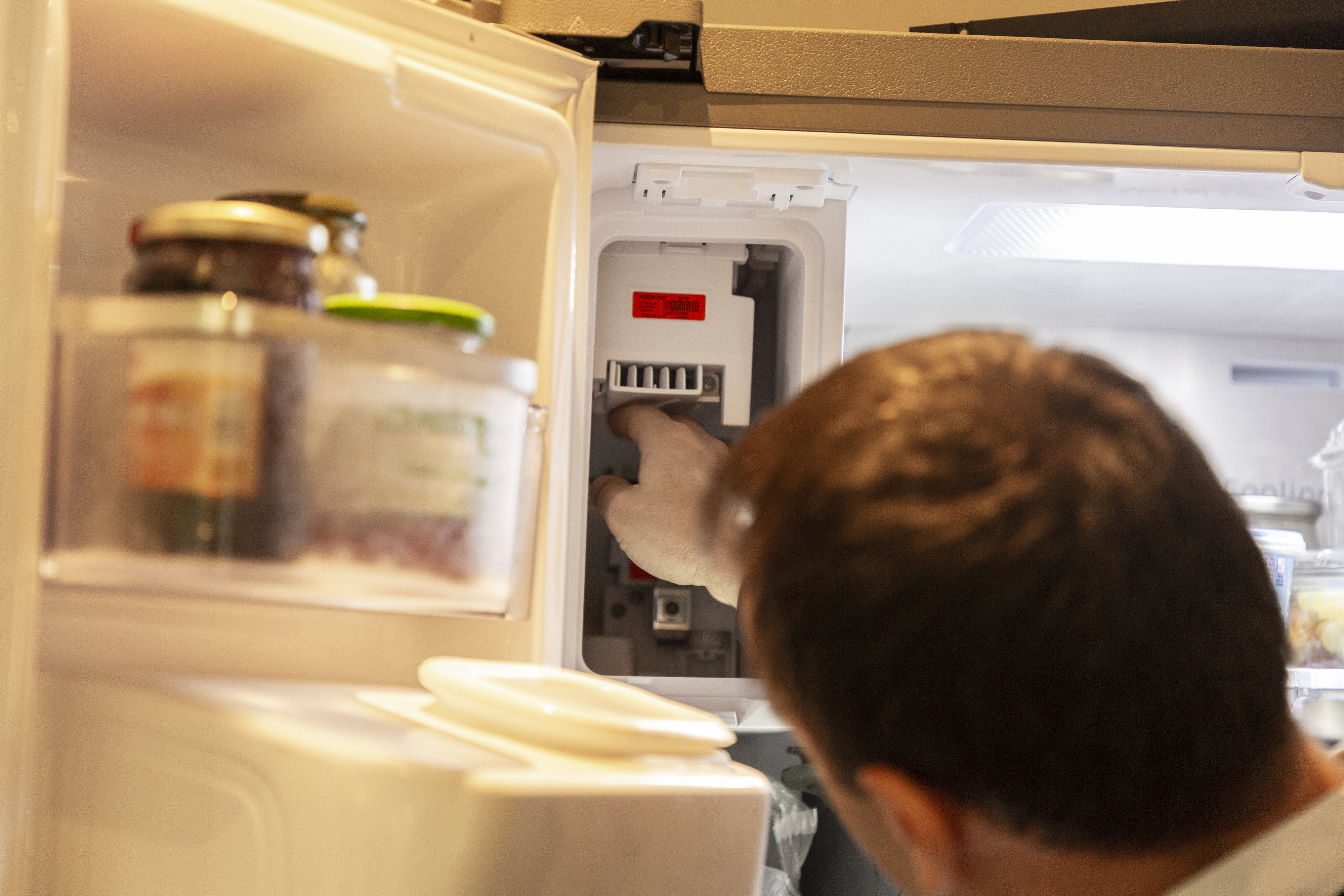

A warm fridge with a cold freezer is completely different from both sections dying at the same time. Hisense Total No Frost models use a single evaporator coil to make all the cold air. A motorized air damper then opens and closes to let that cold air climb into the fridge.
Because of this design, you can easily end up with a freezer that freezes food perfectly while your fresh food compartment stays completely warm. Before you spend any money, you need to check if your freezer is still freezing while only the fridge is warm.
Guessing wrong here will make you waste time on the wrong repair path. On models like the PureFlat RF, RS and FMN multi-door series, that single evaporator coil hides right behind a removable panel inside the freezer.
The motorised damper acts like a gatekeeper. If the freezer works great but the fridge is warm, the cooling system is actually doing its job, but the cold air just cannot get upstairs because the damper or the air channel is completely blocked.
- Figure out if the issue is just a warm fridge or if the whole appliance went dead.
- The freezer generates the cold and a damper moves it to the fridge.
- A broken heater, bi-metal thermostat or thermal fuse will choke your airflow with hidden ice.
- Look at your power supply, settings, door seals and condenser coils before starting anything.
- Food pushed against the vents or hidden ice in the ducts will silently stop the cooling.
- If both sections are totally warm, you need to listen for the compressor and look for oily leaks.
- Bad door gaskets let humid air rush inside, which creates massive ice buildup.
The Main Culprits Behind Hisense Cooling Issues
I have worked on thousands of these units and a few specific problems cause almost all of these complaints.
Defrost system failure
This is the absolute number one reason your fridge gets warm while the freezer stays cold. The automatic defrost cycle uses three parts connected in a row.
You have the defrost heater element, the bi-metal defrost thermostat and a one-shot thermal fuse. When any single part breaks, frost builds up without stopping.
You will not see it from the outside, but it completely encases the evaporator fins in solid ice behind the back panel.
Evaporator fan motor failure
Sometimes the fan spins beautifully when you push it with your finger, but it completely fails to turn on when the fridge sends it power. Without that fan running, the cold air just sits at the bottom of the unit instead of moving around.
Air damper failure
People miss this all the time. The motorised damper door can break down mechanically or lose electrical power, leaving your fridge completely cut off from the cold air supply.
Compressor relay failure
If the start relay or overload protector stops the compressor from turning on, both sections will die together, which is a massive clue that your issue is not just a sticky damper. Because dealing with relays and electrics requires professional handling, you will need to book expert Hisense fridge freezer repairs to have the component safely tested and replaced.
Learn more about some of the most common fridge freezer problems.
Initial Checks You Can Do Today
You should always start with the easiest checks before you go buying expensive components. You can do these without any tools at all.
- Check the power: If the interior lights turn on but nothing is cooling, you know your wall outlet is fine and the issue lives inside the cooling system itself.
- Look at the temperature settings: If you have a Wi-Fi model, someone might have accidentally touched the settings on the ConnectLife app. Your fridge needs to be at 3–5°C and the freezer should sit at -18°C.
- Test the door seals: Take a piece of paper, shut it in the door and pull. If it slides out with zero resistance, warm air is leaking inside and creating heavy ice.
- Clean the condenser coils: These live at the bottom or the back of the unit. Dust buildup stops the fridge from releasing heat and a quick vacuum can instantly bring a neglected fridge back to life.
What to Do When the Freezer Won’t Freeze
When the freezer itself cannot hold -18°C, you are dealing with a totally different problem. Soft ice cream or ice crystals on your food mean the freezer is losing the battle.
First, go to the back of the fridge and listen for a low hum or feel for a slight vibration. That black dome is your compressor. If the fridge lights work but the compressor is completely silent, the start relay or the overload protector has likely failed.
If the compressor hums along happily but things are still melting, the evaporator fan is probably dead.
On newer Hisense PureFlat and FMN models, you actually have dual fans. One handles the freezer and the other handles the fresh food side, so a dead fan might only ruin one zone. On older models, a single fan does everything.
| Symptom | Most Likely Cause | Sections Affected |
|---|---|---|
| Freezer is cold, fridge is warm | Defrost failure or broken air damper | Fridge only |
| Freezer is warm, compressor is silent | Broken start relay or overload protector | Both sections |
| Freezer is warm, compressor is running | Evaporator fan motor failure | Freezer or both sections |
If the freezer is only partially freezing, the evaporator fins are likely choked with a bit of ice and the 24-hour defrost test will help you figure this out.
Find out what to do if you notice your fridge leaking water alongside cooling loss.
Error Codes and Thermostat Troubles
Accidental bumps on the touchscreen panel happen all the time, so double-check your numbers before assuming the worst.
If the display shows the right numbers but the inside is warm, you probably have a broken sensor. The fresh food compartment uses an NTC thermistor to tell the control board when to open the damper. If this sensor cracks or gets wet, it triggers an F1 error code on most RF and FMN models.
When you see that F1 code, pull the plug from the wall and walk away for 10 minutes. This lets the control board capacitors drain completely, which clears out simple software glitches. But if that code comes right back after you plug it in, the sensor is broken and a reset will not fix it.
Airflow and Ventilation Blockages
The evaporator fan does not actually blow directly into your fridge. It moves air around the freezer and the motorised damper opens up when the fridge sensor says it is getting too warm.
- Blocked vents: Pushing giant milk jugs or food containers right against the back wall air grilles will block the cold air from entering the room.
- Hidden duct icing: The air tunnel connecting the two sections can freeze solid. This ice hides deep inside the plastic housing where you cannot see it.
- Fan speed issues: Sometimes the fan makes noise so you think it works, but it is spinning too slowly to actually push air through the vents.
How to Deal With Internal Ice Buildup
The worst ice is the stuff you cannot see. It grows silently behind the back wall of your freezer over a few weeks. By the time your milk goes sour in the fridge, the cooling coils are already buried inside a giant block of ice. The fan might still make noise, but the air cannot move through that solid wall of frost.
This happens because the defrost heater, the bi-metal thermostat or the thermal fuse broke down. That thermal fuse is a safety switch that blows permanently if the heater gets too hot, and once it blows, the whole system stays dead until you swap it out.
The 24-hour defrost test
- Unplug the power cord from the wall.
- Open both doors wide and leave them open for a full 24 hours.
- Plug the unit back in and watch the fridge temperature for the next 4 to 6 hours.
If the fridge starts cooling normally again, you just proved your defrost system is broken. The test melted the ice block so air can move again, but the frost will return in a few weeks because you still haven’t fixed the broken part.
Do not try to scrape the ice off the panel yourself with a screwdriver. The aluminum pipes back there are incredibly thin. If you slip, you will puncture the line, and because Hisense uses R600a gas, you will release a highly flammable gas right into your kitchen.
Compressor Maintenance and Gas Leaks
If both sections are completely warm and the compressor is scalding hot to the touch, or if it runs forever without making things cold, look closely at the pipe connections. If you spot a greasy, oily residue near the joints, that means your refrigerant gas is leaking out.
Modern Hisense fridges use R600a refrigerant, which is an isobutane gas. It is much better for the environment, but it is highly flammable. Working on these sealed systems requires specialised gear and professional training so you don’t accidentally cause a fire in your home.
Your Step-by-Step Troubleshooting Checklist
- Watch the pattern: Is it just the fridge that is warm or is the whole unit dead? Fridge-only issues point to airflow, but a totally warm unit points to the compressor.
- Check the display: Make sure the lights work and verify that the settings are still at 3–5°C and -18°C.
- Do the paper test: Test the seals on both doors to make sure warm room air isn’t slipping inside.
- Clean the back coils: Vacuum away the dust bunnies from the bottom or rear grids to let the system breathe.
- Try the 24-hour melt: If the freezer is cold but the fridge is warm, unplug it for a day to melt hidden ice.
- Reset the board: If you see an F1 code, leave it unplugged for 10 minutes to reset the computer logic.
- Listen to the base: Check if the compressor is humming, silent or covered in oily residue.
If you own a Hisense PureFlat with a My Fresh Choice convertible drawer, remember that this section uses its own separate damper and sensor. If that drawer stops working while the rest of the fridge is fine, you just have a broken drawer damper, which is much cheaper to fix than a main system failure.
When to Call in the Experts
If you tried these steps and your food is still warm, the issue is too big for a DIY fix. Sealed system leaks, broken control boards and blown thermal fuses require proper multi-meters and diagnostic training.
Hisense gives you a 2-year parts and labor warranty on most UK models, extending this to 5 years for others, and they even extend that to 5 years on the compressor for premium models. Check your paperwork before you pay anyone out of pocket.
If you are out of warranty and live around London or the Home Counties, our team at Domex can get out to you fast. We are an authorised Hisense service partner with a 4.7/5 rating on Trustpilot across thousands of reviews.
We offer a 12-month guarantee on our work, and we carry the right spare parts to finish four out of five repairs on our very first visit. Book an authorised Hisense fridge or freezer repair online or call us directly at 0330 210 2100 to get a quick quote.
Frequently Asked Questions
Why is my fridge warm but the freezer is still cold?
This almost always means your defrost system broke down or the fan died. The freezer is making cold air, but it cannot get into the fridge because a hidden block of ice is blocking the tunnel or the motorised damper door is stuck shut. Try the 24-hour defrost test to clear the ice and see if the airflow returns.
What does the F1 error code mean on a fridge freezer?
The F1 code means the control board lost contact with the temperature sensor inside the fridge. This usually happens because of a broken wire or moisture inside the plug. The computer panics and stops moving the air damper properly. Try a 10-minute power reset, but prepare to replace the sensor if the code stays on the screen.
How do I reset my fridge freezer?
Pull the plug from the wall and wait at least 10 full minutes. Do not just unplug it and plug it right back in. The control board needs time to lose all power so its memory clears out. If a hard fault code comes back after you turn it on, you have a real hardware failure that requires a tool-based repair.
Does Hisense cover sealed system faults under warranty?
Yes, you get a standard 2-year warranty on appliances in the UK, and premium models bump the compressor and cooling circuit coverage up to 5 years. Check your model number on the Hisense UK support site before booking a technician so you don’t miss out on a free manufacturer repair.